
by Jordan Dean on Oct 26, 2026
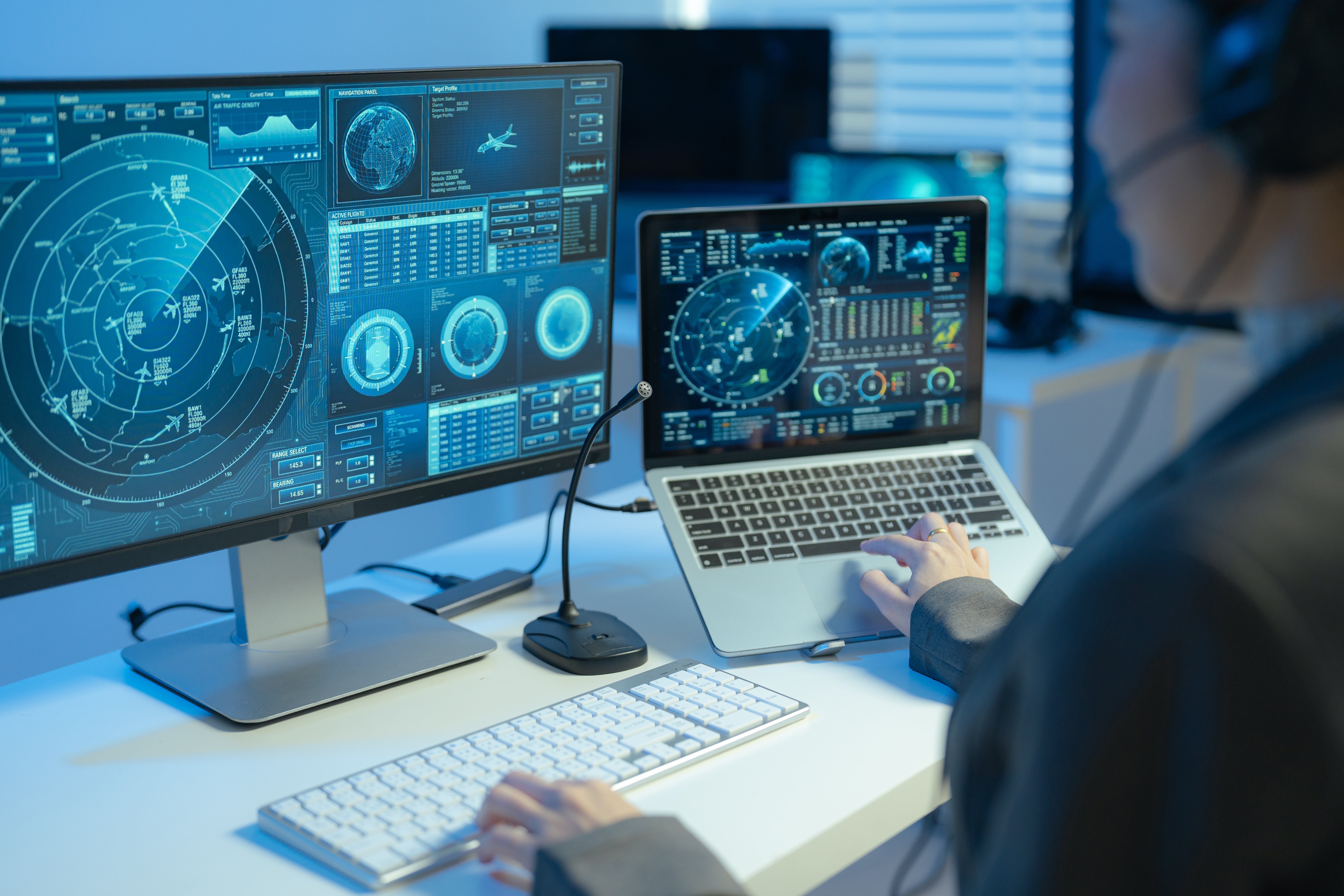
Every time an aircraft takes off, an enormous network of digital systems is working behind the scenes. From navigation and air traffic communications to airport operations and aircraft maintenance, modern aviation depends on technology to keep flights safe, efficient, and connected.
Unlike many other industries, where a cyberattack might primarily result in financial losses or stolen data, cybersecurity incidents in aviation can also affect physical safety, transportation infrastructure, and national security.
Cybersecurity across the aviation ecosystem
Aviation cybersecurity involves protecting the digital infrastructure that supports aircraft, airports, airlines, and air traffic control operations. While modern aircraft rely on sophisticated technology, much of the industry's supporting infrastructure was designed decades ago, long before today's cybersecurity threats existed.
This creates an unusual challenge where aviation organizations must protect modern, interconnected technologies while continuing to operate older systems that remain essential to daily operations.
The U.S. Government Accountability Office (GAO) has identified increasing connectivity between aircraft and external systems as an important cybersecurity concern. However, connectivity is only part of the problem, and some of aviation's greatest cybersecurity challenges come from the technology the industry has yet to replace.
Aviation's reliance on decades-old technology
Most industries can replace outdated computers and software as newer technologies become available, but aviation doesn't always have that flexibility.
In an industry where reliability and safety are crucial, replacing a system that has worked for decades can introduce significant operational risks. New technology requires extensive testing, compatibility assessments, and approval before it can be deployed. As a result, some critical aviation infrastructure continues to rely on technology developed long before modern cybersecurity practices became standard.
Air traffic control systems still rely on aging technology
In 2025, the Federal Aviation Administration (FAA) announced plans to modernize aging air traffic control infrastructure, including systems that still relied on Windows 95-era technology and floppy disks. According to Ars Technica, the modernization effort highlighted just how long some technologies had remained in service.
Aging technology introduces cybersecurity challenges that involve much more than outdated software. Older systems may no longer receive vendor support, replacement components can become difficult to obtain, and modern cybersecurity tools may not be compatible with the underlying infrastructure.
The hidden cybersecurity challenge of COBOL
An example of aviation's reliance on legacy technology is COBOL, a programming language developed in 1959 that continues to support transaction-processing systems in several industries, including aviation.
Legacy airline reservation and ticketing infrastructure has historically relied on mainframe technologies and programming languages such as COBOL. These systems were built to process massive volumes of transactions reliably, making them difficult and expensive to replace.
But maintaining these aging systems is becoming even more difficult as the people who know how they work become harder to find. As experienced mainframe programmers retire, organizations can face a shrinking number of specialists capable of maintaining older applications, reviewing their code, and safely implementing security improvements.
When fewer people understand how a critical system works, identifying vulnerabilities and recovering from failures can become considerably more complicated.
Why is cybersecurity so important in aviation?
Aviation operates under conditions that make cybersecurity particularly challenging. Systems must remain reliable, interruptions can affect thousands of passengers, and changes to critical technology can often require significantly more planning than in conventional business environments.
The consequences can affect much more than commercial transportation. Aviation infrastructure supports emergency medical flights, military operations, disaster response, and international supply chains. A prolonged disruption can ultimately affect far more than an airline's schedule.
Recognizing these risks, the International Civil Aviation Organization (ICAO) has emphasized the importance of coordinated cybersecurity efforts across the global aviation industry.
Cybersecurity threats unique to aviation
Although aviation organizations face familiar threats such as ransomware and credential theft, several risks are particularly significant because of the industry's reliance on navigation technology, interconnected operations, and specialized infrastructure.
GPS spoofing and signal interference
Aircraft depend on satellite navigation signals for important positioning and navigation functions. Unfortunately, these signals can be disrupted or manipulated.
GPS jamming interferes with satellite signals, potentially preventing receivers from obtaining reliable positioning information. GPS spoofing is more deceptive, transmitting misleading signals that can cause receivers to calculate an incorrect location or time.
A September 2026 GAO report examined GPS interference and highlighted challenges in the FAA's ability to monitor and assess these threats. Unlike conventional cyberattacks against computer networks, GPS interference can originate outside an aviation organization's infrastructure, making it especially difficult for individual operators to prevent.
Ransomware and disruptions to airport operations
Airports and airlines depend on digital systems for passenger check-in, baggage handling, crew scheduling, and flight coordination. When these systems become unavailable, the consequences can quickly extend beyond the initially affected organization.
For example, a ransomware attack against an airline's operational systems could delay passenger processing, disrupt crew duties, or prevent employees from accessing essential information needed to coordinate hundreds of flights.
Even when flight-critical systems remain unaffected, disruptions to supporting infrastructure can result in delays, cancellations, and significant financial losses. This makes operational continuity a particularly important component of aviation cybersecurity. Organizations need to understand not only which systems could be compromised, but also how an outage could affect other services that depend on them.
Third-party technology and interconnected systems
Airlines and airports rarely operate independently. They rely on technology providers, maintenance contractors, reservation platforms, and other external organizations to support daily operations. These relationships create dependencies that can expose organizations to cybersecurity risks originating outside their own networks.
For instance, a compromised third-party platform used for passenger processing could affect multiple airlines or airports that depend on the same service, and the challenge becomes even greater when newer software must communicate with older aviation infrastructure. These connections can introduce additional exposure if systems aren't carefully managed.
How can aviation organizations strengthen cybersecurity?
Rather than applying the same security measures to every system, organizations need to understand which technologies support critical operations and how those systems could be affected by an attack.
|
Priority |
Why it matters |
Recommended approach |
|
Protect legacy systems |
Older aviation technology may be difficult to patch or replace without disrupting operations. |
Use network isolation, restricted connectivity, and continuous monitoring to reduce exposure. |
|
Separate critical networks |
An intrusion into business or passenger-facing systems could spread to sensitive operational infrastructure. |
Segment networks and monitor connections between operational and administrative systems. |
|
Manage third-party risks |
Vendor compromises or outages can disrupt essential aviation services. |
Identify critical service providers and assess their potential impact on operations. |
|
Plan for outages and recovery |
Failures in reservation, communication, or supporting systems can interrupt aviation operations. |
Establish recovery procedures and contingency plans to maintain essential services. |
Continuous security monitoring can help identify suspicious behavior around aging systems, while effective incident response allows organizations to investigate and contain threats before they cause wider disruption.
The future of aviation cybersecurity
Aviation is facing a difficult balancing act – the industry needs to modernize infrastructure that has supported operations for decades while ensuring that new technologies don't introduce additional risks.
The FAA's efforts to replace aging air traffic control technology demonstrate the scale of this challenge. Modernization requires more than purchasing new equipment. It involves replacing deeply integrated systems while maintaining the reliability and safety that aviation operations demand.
For aviation organizations, the goal isn't simply to replace every outdated system. It's to understand where existing technology creates risk, introduce security improvements safely, and maintain visibility across the infrastructure that keeps operations running.
Protecting the systems behind every flight
Aviation cybersecurity presents challenges that few other industries face. From decades-old air traffic control infrastructure to specialized reservation systems and vulnerable navigation signals, protecting aviation requires an understanding of technology that cannot always be easily replaced or taken offline.
As the industry continues to modernize, organizations must balance operational reliability with the need to detect and respond to evolving threats. The challenge is protecting both the technology aviation depends on today and the systems that will support it tomorrow.
Strengthen your cybersecurity with RADICL
Aging infrastructure, interconnected systems, and evolving cyber threats make continuous security visibility increasingly important.
At RADICL, we help organizations strengthen their defenses through continuous threat monitoring, proactive detection, and rapid incident response. By identifying suspicious activity early and responding before threats escalate, organizations can better protect the systems and operations they depend on.
Contact RADICL today to learn how we can help strengthen your organization's cybersecurity posture.
FAQs
Why does aviation still use outdated technology?
Many aviation systems were built for long-term reliability and remain essential to critical operations. Replacing them requires extensive testing, investment, and coordination to avoid disruptions. While some older systems operate in controlled environments that limit cyber risks, aging infrastructure still presents maintenance and security challenges.
What are the biggest cybersecurity threats in aviation?
Significant threats include ransomware targeting airport and airline operations, GPS spoofing and jamming, third-party technology compromises, and vulnerabilities associated with aging infrastructure. These threats can disrupt essential services even without directly compromising aircraft flight controls.
How can aviation organizations improve cybersecurity?
Aviation organizations can strengthen cybersecurity by isolating legacy systems, monitoring connections between critical infrastructure and business networks, evaluating third-party dependencies, and preparing for operational disruptions. Continuous threat detection is especially important when critical systems cannot be easily patched or replaced.

No Comments Yet
Let us know what you think