





















Cybersecurity for DHS Contractors

Protect Sensitive Work. Strengthen Daily Security. Prepare for What’s Next.

RADICL provides Virtual Security Operations Center (vSOC)-led cybersecurity for DHS contractors and subcontractors supporting sensitive federal missions.

We help lean teams run day-to-day security operations, respond to threats, and maintain defensible evidence as federal requirements evolve — without building and staffing an enterprise SOC in-house.

Talk to a Specialist Learn About Our Platform
  • ACS

  • Aerial Machine & Tool

  • Agile Space Industries

  • Anew Solutions

  • Barn Owl Tech

  • Blue Sky Innovators

  • C Speed

  • DLZ

  • Electra Aereo

  • Firehawk Aerospace

  • G&H

  • Havoc AI

  • HTX Labs

  • Miltope

  • MAK Technologies

  • Red6

  • SpektreWorks

  • Stonhard: Commercial & Industrial Flooring

  • Trenton Systems

  • Urban Sky

  • VATN Systems

  • Zone5 Technologies

Why DHS-Related Contractors
Face a Distinct Cybersecurity Challenge

Contractors supporting Department of Homeland Security (DHS)-related work can face federal customer expectations, sensitive-data requirements, and contract-specific security obligations without the resources of a large prime.

The challenge is sustaining the security work behind those obligations while the broader civilian-federal compliance landscape continues to evolve.

Federal Customers Raise the Security Bar

Federal Customers Raise the Security Bar

DHS contracts and prime-contractor flowdowns can require safeguarding information, demonstrating security practices, and supporting customer reviews.

Contractors need security operations they can sustain and evidence when a customer or prime asks.

Lean Teams, Federal-Grade Expectations

Lean Teams, Federal-Grade Expectations

Growing contractors may need continuous monitoring, investigation, vulnerability management, and incident readiness without a dedicated security department.

Those responsibilities are hard to sustain when the same team also manages infrastructure, users, and contract delivery.

Sensitive and Controlled Data Flows Through Your Systems

Sensitive and Controlled Data Flows Through Your Systems

Applicable DHS contracts can involve Controlled Unclassified Information (CUI) and other sensitive federal information.

Protecting that information requires clear ownership across the systems, people, and partners that handle it.

The Civilian Compliance Picture Is Shifting

The Civilian Compliance Picture Is Shifting

DHS already has contract-specific CUI safeguarding requirements. Governmentwide requirements are evolving as well.

A proposed Federal Acquisition Regulation (FAR) CUI rule would introduce a more standardized approach across civilian federal contracts. The rule remains proposed as of October 2026.

What DHS-Related Contractors
Are Up Against

These organizations face familiar cyber threats under conditions that can raise the stakes: sensitive federal work, connected supplier ecosystems, contractual reporting requirements, and limited internal security capacity.

Ransomware and Operational Disruption

Ransomware can spread from one system to identities, endpoints, and communications, quickly disrupting operations, mission support, and DHS contract delivery.

Phishing, Credential Theft, and BEC

Phishing, stolen credentials, and Business Email Compromise (BEC) give attackers trusted access to steal data, redirect payments, and reach cloud systems.

Sensitive Data and CUI Exposure

Compromised accounts, excessive access, or third-party connections can expose Controlled Unclassified Information (CUI) beyond its intended boundary.

Supply-Chain and Prime Flowdown Risk

Contractors inherit flowdown requirements from primes while relying on vendors and subcontractors with system access, adding risk and blurring ownership.

Nation-State and Advanced Threats

Nation-state actors target federal contractors for sensitive data, persistent access, or a path into larger organizations, often slipping past lean teams that rely on alerts alone.

Insider and Human Risk

Accidental disclosure, credential misuse, malicious insiders, and employees bypassing security controls create human risk that role-based security awareness training helps reduce.

The Shifting Compliance Picture for DHS-Related Contractors

Cybersecurity requirements depend on the specific contract, information, systems, and customer.

Some requirements already exist for applicable DHS contracts. Others are broader federal frameworks or proposed governmentwide rules.

NIST SP 800-171 NIST Compliance Services
Div Line_Desktop
Div Line_Mobile

Where Lean Contractor Teams Get Stuck

Lean contractor teams often get stuck when recurring security work outpaces available time and ownership.

No practical 24/7 coverage

No practical 24/7 coverage

Lean IT and security teams cannot monitor and investigate threats around the clock while also delivering on DHS contract work.

Fragmented or incomplete telemetry

Fragmented or incomplete telemetry

Logs spread across identities, endpoints, cloud, firewalls, and vendor tools hide collection gaps until an incident or audit.

Alert overload

Alert overload

High alert volumes bury real threats in noise, leaving teams without the context, prioritization, or clear ownership needed for fast triage.

Vulnerability backlogs

Vulnerability backlogs

Vulnerability scans outpace teams’ ability to prioritize, remediate, and verify findings, leaving critical systems exposed.

Unclear response authority

Unclear response authority

During incident response, IT, leadership, primes, and MSPs may not know who can isolate, restore, report, or communicate.

Complex, shifting requirements

Complex, shifting requirements

Teams struggle to know which federal cybersecurity requirements apply, what compliance evidence is expected, and who owns it.

Scattered evidence

Scattered evidence

Compliance records end up scattered across tickets, email, spreadsheets, and vendor portals, slowing audits and assessments.

Black-box providers

Black-box providers

Managed security providers send alerts or reports without showing what was investigated, what remains open, or who owns closure.

How RADICL Supports Day-to-Day Security Operations

RADICL works alongside your team to keep recurring security work moving and responsibilities clear.

How the Work Gets Done
What It Looks Like
Monitor and Investigate
RADICL continuously reviews supported security telemetry and investigates activity that requires attention.
Coordinate Response
The vSOC takes supported response actions and coordinates customer-side work with your IT team, MSP, or other responsible partner.
Track Remediation
Findings and remediation work stay assigned and visible until the appropriate team reports completion.
Maintain Evidence
Security cases, tasks, remediation history, exercises, and supporting records stay connected to the work that produced them.
Keep Ownership Clear
Responsibility boundaries define what RADICL operates and what remains with your organization, prime, MSP, or another partner.

RADICL guides what constitutes compliant implementation. Your organization, MSP, or other responsible party performs required customer-side configuration and remediation work.

RADICL’s vSOC-Led Model

RADICL's vSOC connects security telemetry, investigation, response, and follow-through through one managed operating model.

Signals In

Signals In

Supported endpoint, identity, network, and security telemetry.

Investigate

Investigate

Expert investigation supported by AI-assisted workflows.

Respond and Coordinate

Respond and Coordinate

Supported response actions and coordinated handoffs.

Document the Outcome

Document the Outcome

Cases, remediation, ownership, and outcomes remain visible.

Div Line_Desktop
Div Line_Mobile

The Hardest Cybersecurity Controls for DHS-Related Contractors

The hardest security requirements are often the recurring ones. They have to work during normal operations and still produce useful information when an incident, customer request, or contract review occurs.

24/7 Health Monitoring

Log Management

Logs have to remain collected, searchable, retained, and available when an investigation or review begins. Missing data can limit both response and evidence.

Icon-88

Incident Response

Roles, authority, escalation paths, and reporting procedures need to be understood before an incident. For applicable DHS contracts, reporting windows can be as short as one hour.

Icon2-66

24/7 Detection and Response

Suspicious activity does not wait for business hours. Teams need a way to investigate alerts quickly enough to support response and time-sensitive reporting obligations.

Icon2-67

Risk-Based Vulnerability Management

Scanning is only the beginning. Teams still need to determine what matters most, coordinate remediation, and verify that reported fixes were completed.

Icon2-68

Security Awareness

Employees need practical preparation for phishing, credential theft, social engineering, and Business Email Compromise without turning training into another administrative burden.

Icon_Compliance

Continuous Evidence and Readiness

Security work needs to remain traceable. Cases, remediation records, exercises, logs, and other artifacts are more useful when captured as the work happens.

RADICL Solutions for DHS-Related Contractors

Div Line_Desktop

vSOC and Managed Detection and Response

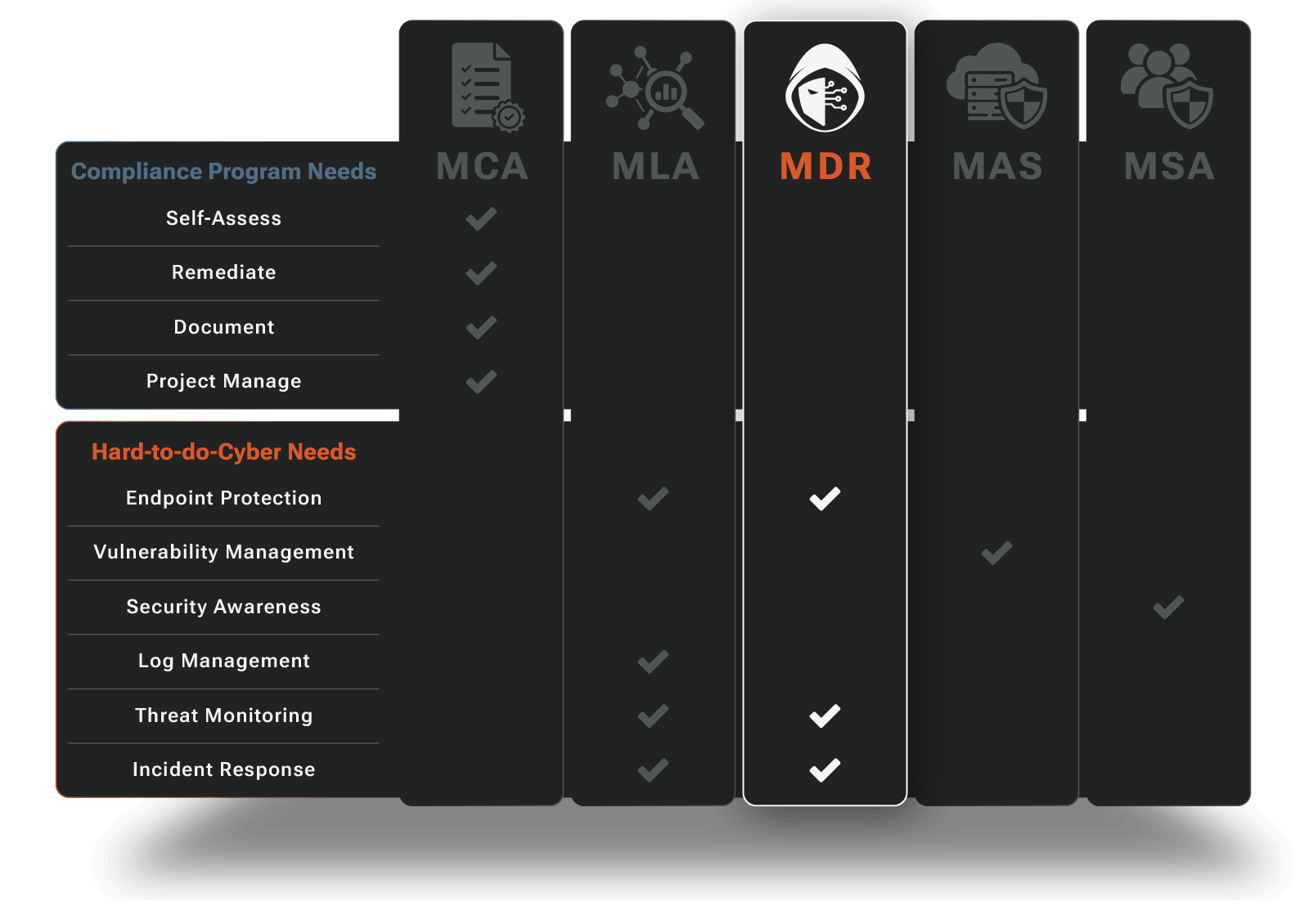
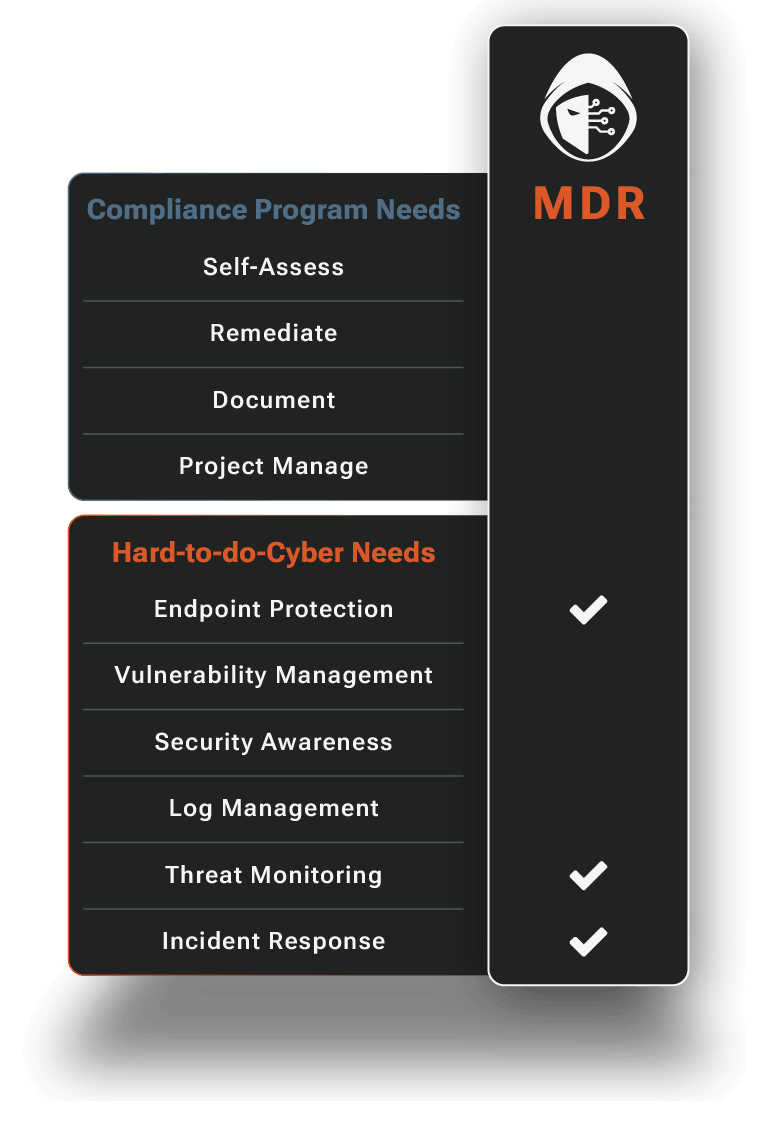
Managed Detection and Response (MDR) provides 24/7 investigation, threat hunting, supported containment, and coordinated response.

RADICL's vSOC gives lean teams continuous coverage without staffing an internal SOC.

  • Endpoints and Servers Protected
  • Evasive & Embedded Threats Detected and Stopped
  • 24/7 Security Operations Has Your Back
  • Incidents Managed End-to-End
  • Virtual CISO By Your Side

MDR: Endpoint

MDR: Endpoint is the foundation of our MDR offering. We deploy, optimize, and maintain leading EDR technologies (for example, CrowdStrike, SentinelOne, and Microsoft Defender) across your laptops, workstations, and server infrastructure. We deploy custom detection analytics to spot threats out-of-the box EDR miss.

MDR: Identity

With MDR: Identity, we ingest and analyze data from Identity and user activity data sources like Microsoft 365 and Google Workspace. We monitor authentication activity, access to sensitive data and files, and email behavior to detect account takeover, inbox compromise, and data exfiltration.

MDR: Network

MDR: Network collects alarms and threat data from physical, wireless and cloud network infrastructure. We correlate this with endpoint and identity telemetry to fully investigate suspicious behavior and provide defense‑in‑depth coverage.

How RADICL Detects and Responds

Below is a closer look at our Managed Detection and Response (MDR) operations. This is how we turn signals into 24/7 investigations, containment, and tracked remediation.

 
Stage
What We Do
What You Get
1
Signals In
Ingest endpoint, identity, infrastructure, and network telemetry.
Full visibility with guided onboarding and managed data operations.
2
DeepThreat™ Analytics
Apply continuous analytics using proprietary threat intelligence.
Detection of threats missed by standard vendor alerts.
3
DeepThreat™ Hunts
Conduct expert-led threat hunts across your environment.
Identification of hidden and stealthy threats.
4
Triage
Evaluate alerts to determine real risk.
Confidence that every alert is reviewed and validated.
5
Investigate
Analyze incidents and capture evidence.
Clear incident visibility with documented findings and history.
6
Execute and Coordinate Response
Contain threats and coordinate remediation.
Confidence that response is handled and actions are clearly owned.
7
Improve Resiliency
Apply learnings and implement proactive defenses.
Stronger security posture with tracked actions and audit-ready evidence.
Div Line_Desktop

Managed Log Analytics

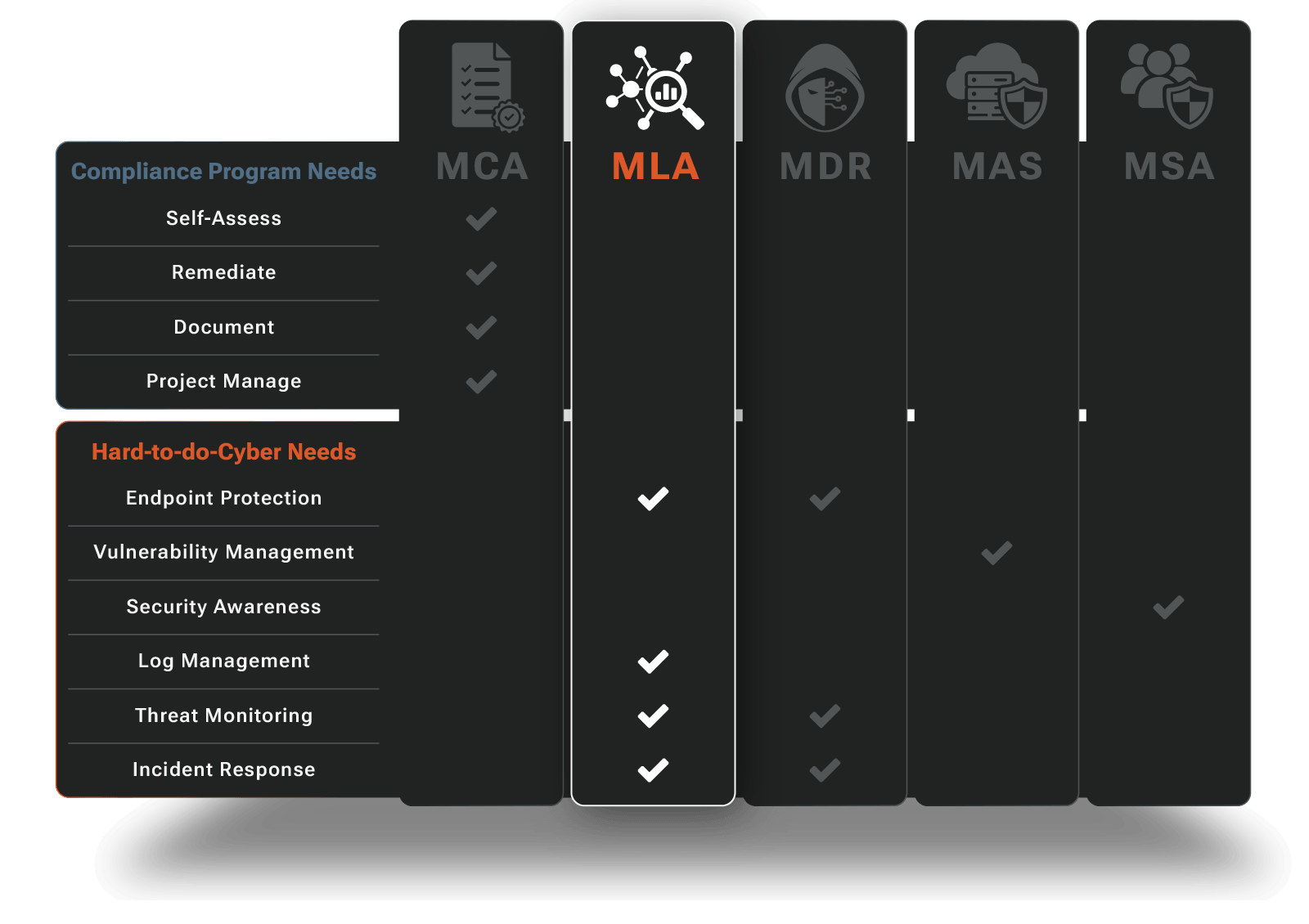
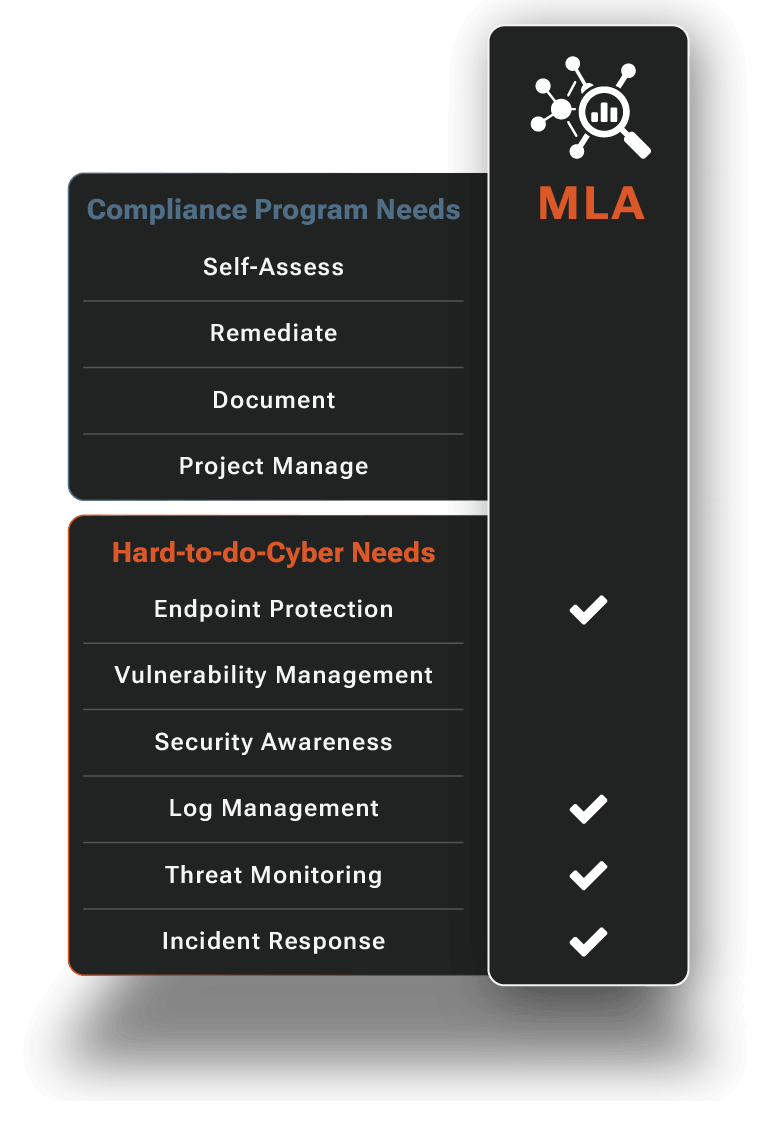
Managed Log Analytics (MLA) centralizes collection, normalization, search, retention, and ingestion-health monitoring across supported log sources.

A one-year archive supports investigations and applicable customer or federal reviews.

  • 14 or 90-Day Velocity Search + 1-Year Archive
  • AI-Assisted Natural Language Search
  • Hunt UX with vSOC Incident Escalation
  • On-Demand Compliance Evidence Export
  • vSOC-Managed Ingestion & Health Monitoring
RADICL_MCA Overview
Div Line_Desktop

Managed Attack Surface

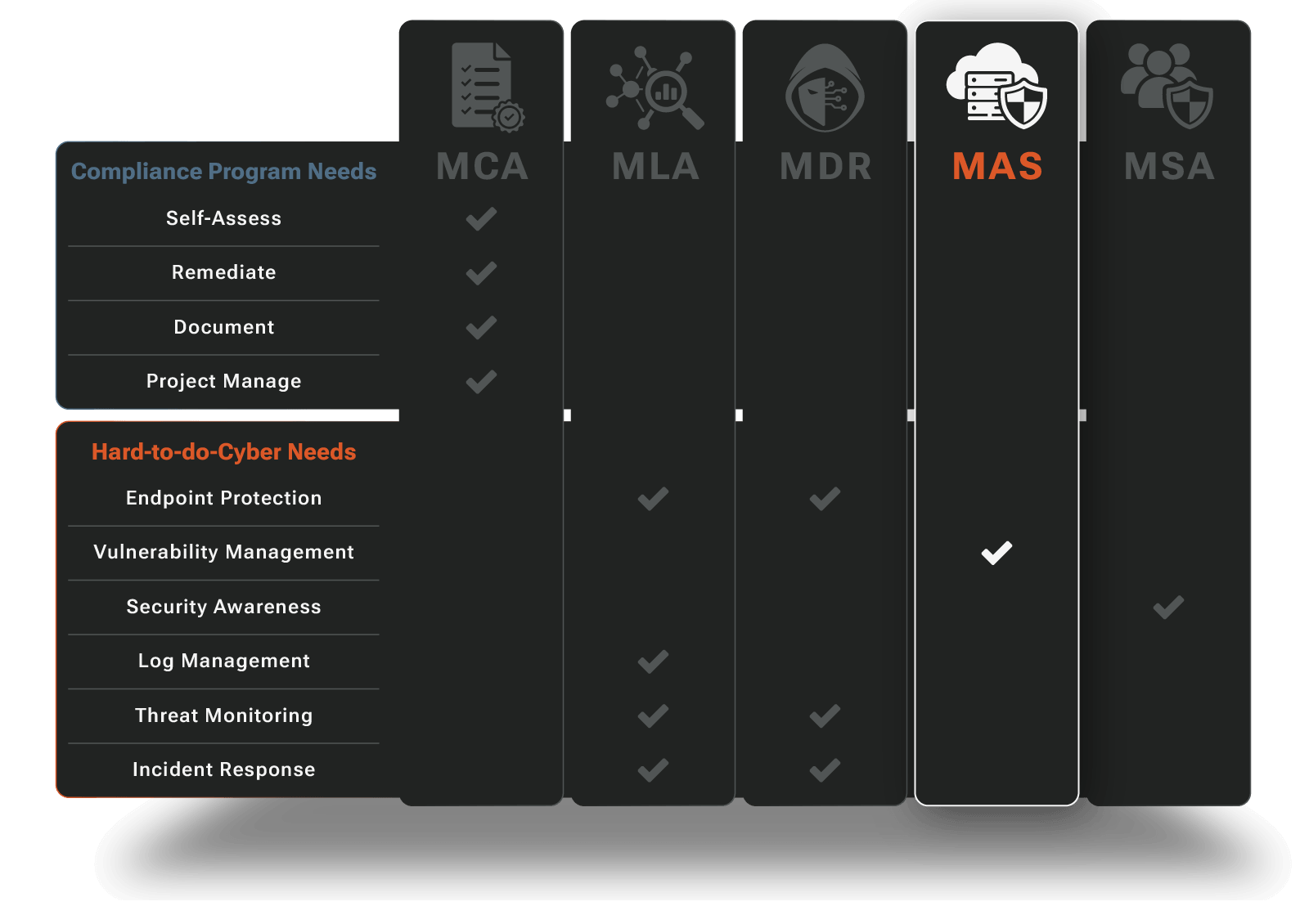
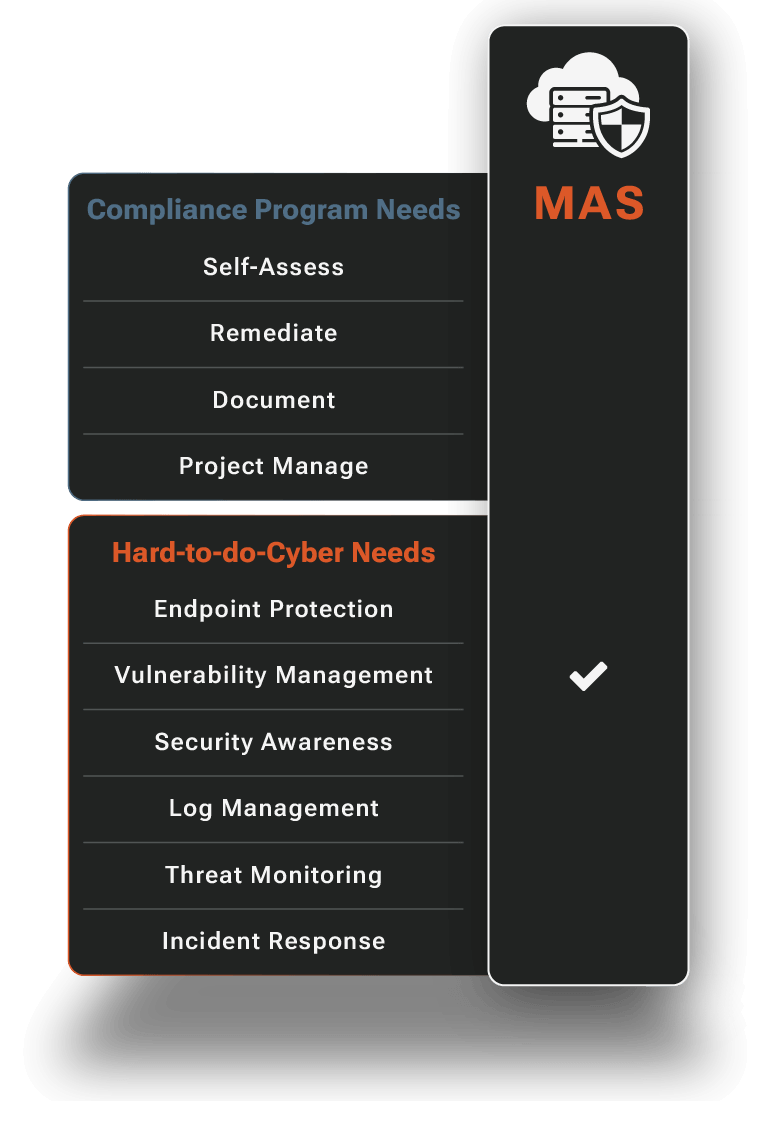
Managed Attack Surface (MAS) identifies and prioritizes vulnerabilities, provides remediation guidance, and verifies reported closure.

  • Endpoint and Server Vulnerabilities Detected and Prioritized
  • Pragmatic and Manageable Remediation Pace
  • Accelerated Critical Fix Response
  • Expert Guidance and Collaboration With Your IT/MSP Partners
  • Closed Loop “Fixed” Visibility
RADICL_MCA Overview
Div Line_Desktop

Managed Security Awareness

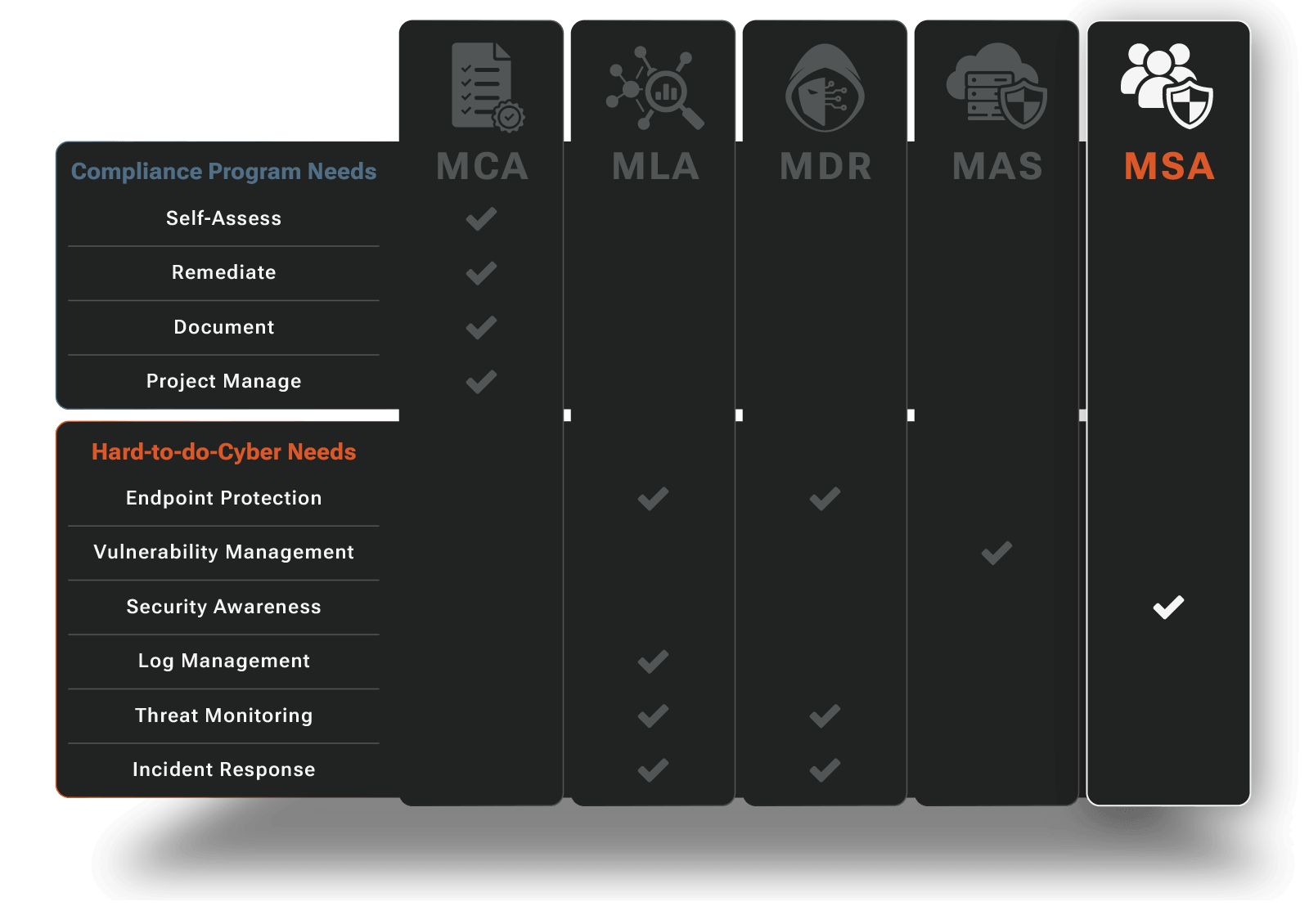
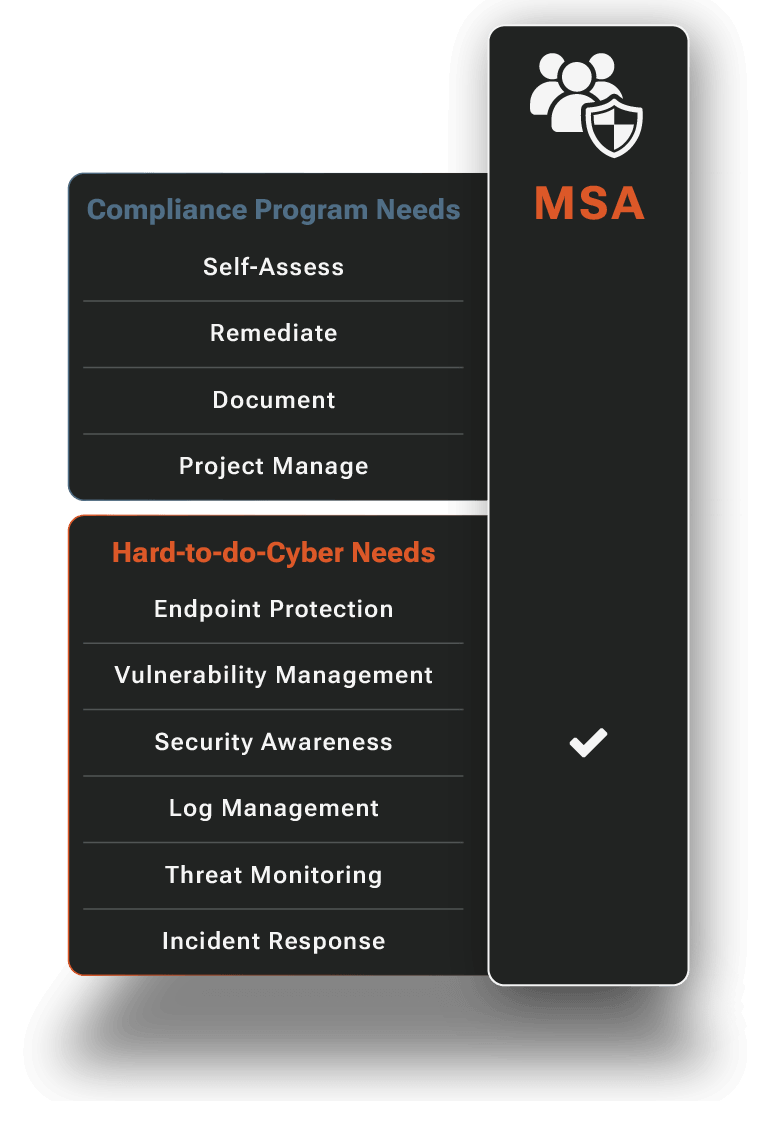
Managed Security Awareness (MSA) provides ongoing training and phishing simulations with visibility into participation and employee risk.

  • Comprehensive Annual Training
  • Ongoing “Bite Sized” Training
  • Phishing Attack Simulations
  • Ever Evolving Expert Content
  • Security Awareness Posture Visibility
RADICL_MCA Overview

RADICL Pricing

The right level of coverage depends on your environment, protected users and systems, selected services, and compliance-support needs. RADICL helps you scope managed security around the responsibilities your team actually needs covered.

View Pricing Get a Scoped Quote

Frequently Asked Questions

Who is this page for — DHS agencies or DHS contractors?

This page is for commercial prime contractors, subcontractors, suppliers, and other organizations supporting DHS-related work. It is not written as a service page for DHS agencies themselves.

What cybersecurity requirements apply to DHS-related contractors?

Requirements depend on your contract, the information you handle, the systems involved, and any prime-contractor flowdowns.

Applicable contracts may include DHS CUI safeguarding and incident-response requirements, NIST standards, and other federal cybersecurity obligations.

Start with the requirements incorporated into your contract rather than assuming one framework applies to every DHS supplier.

Learn more about NIST SP 800-171 and NIST compliance services.

Is CMMC required for DHS contractors?

Not simply because you perform DHS-related work.

CMMC is a Department of Defense program. A contractor may have separate CMMC obligations if it also performs DoD work covered by applicable CMMC requirements.

For DHS work, review the DHS and federal requirements incorporated into the contract.

What is CUI, and do we handle it?

Controlled Unclassified Information is government information that requires safeguarding or dissemination controls under applicable law, regulation, or governmentwide policy.

Whether your organization handles CUI depends on the information involved and your contract.

DHS-related work can involve categories such as Sensitive Security Information (SSI), Protected Critical Infrastructure Information (PCII), Chemical-terrorism Vulnerability Information (CVI), privacy information, and other defined CUI.

Your contracting officer, prime, or qualified compliance resource should confirm the requirements for your engagement.

What is the forthcoming FAR CUI rule for civilian contractors?

The governmentwide FAR CUI rule remains proposed as of October 2026.

The current proposal would introduce standardized FAR provisions and clauses for CUI, including FAR 52.240-6 and 52.240-7. It also references NIST SP 800-171 Revision 3 for applicable CUI on nonfederal systems.

Until a final rule takes effect, contractors should follow the requirements currently incorporated into their contracts.

Does a small federal contractor need its own SOC?

No general requirement exists for every small federal contractor to build and staff an internal SOC. The more useful question is which security capabilities your contracts, customers, and risk profile require. If you need 24/7 monitoring and response, a managed vSOC can provide continuous coverage without building the entire function internally.

RADICL also supports growing businesses that need enterprise-grade security operations with lean teams.

How does RADICL work with primes, MSPs, or our internal IT team?

RADICL defines responsibility boundaries during onboarding and coordinates security work with the appropriate internal team, MSP, or prime.

Customer-side infrastructure and configuration responsibilities remain with your organization or its designated partner.

Learn more about RADICL's approach for MSPs, IT leaders, and compliance leaders.

How does RADICL help protect sensitive federal-adjacent data?

RADICL provides managed security across supported endpoint, identity, network, logging, vulnerability, awareness, and response workflows surrounding sensitive information.

Your organization remains responsible for identifying the information and contractual handling requirements that apply.

Does RADICL work directly with DHS or federal agencies?

This page focuses on commercial contractors and subcontractors supporting federal work. Direct agency engagements can involve different acquisition, authorization, system, and contracting requirements and must be evaluated separately based on scope.

Is RADICL only for defense contractors?

No. RADICL supports growing businesses and regulated organizations across the Defense Industrial Base, critical infrastructure, and other regulated environments.

The requirements vary, but the need for strong monitoring, response, vulnerability reduction, logging, and clear operational ownership extends beyond defense work.