




Business Email Compromise (BEC)

Business Email Compromise (BEC) attacks bypass traditional spam filters by compromising legitimate identities. RADICL delivers a Virtual Security Operations Center (vSOC)-led managed cybersecurity platform that detects anomalous behavior, contains compromised accounts, and protects your revenue and compliance posture.

Talk to a Specialist Learn About Our Platform
Div Line_Desktop
Div Line_Mobile
Business Email Compromise 1

What Is Business
Email Compromise (BEC)?

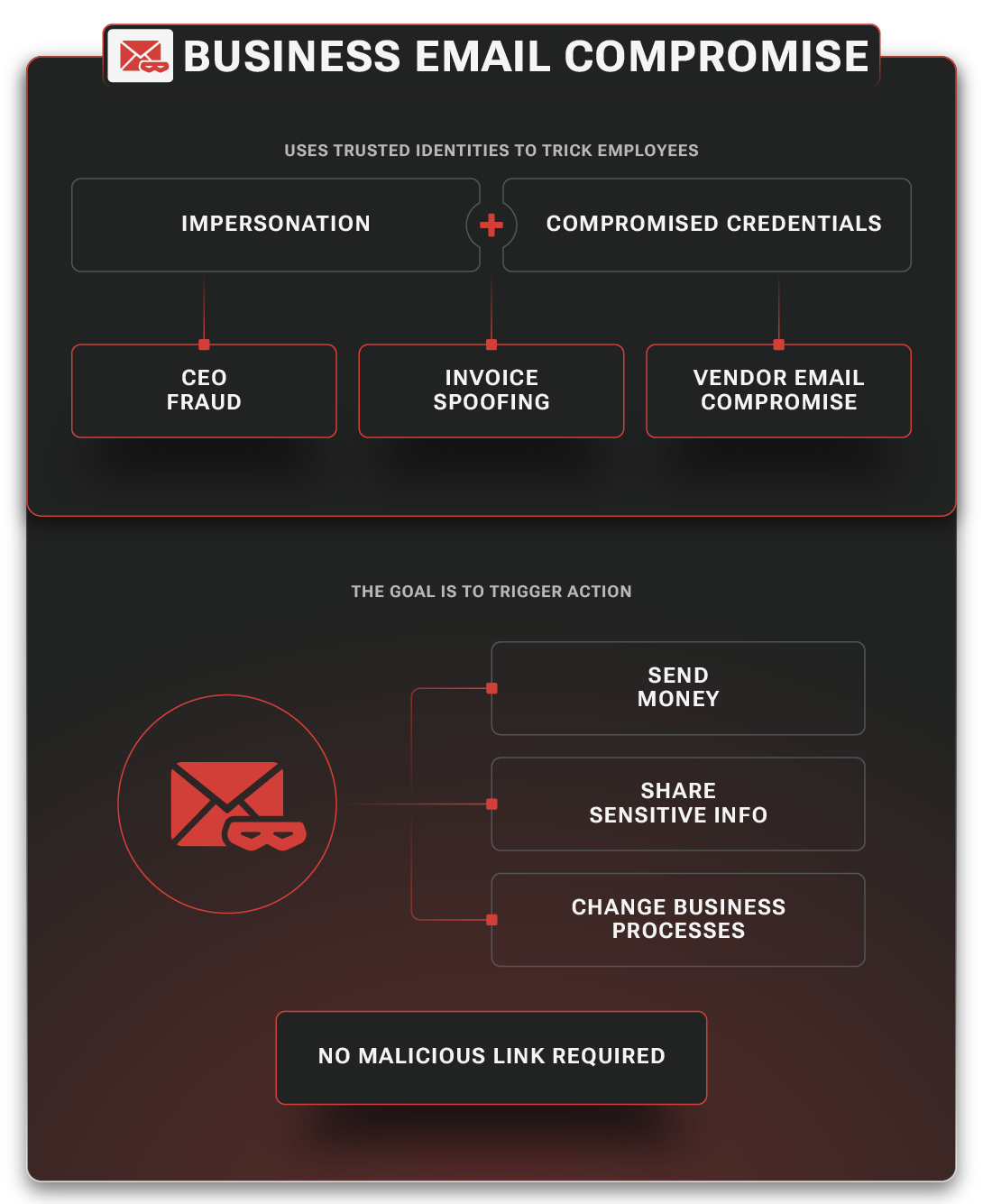
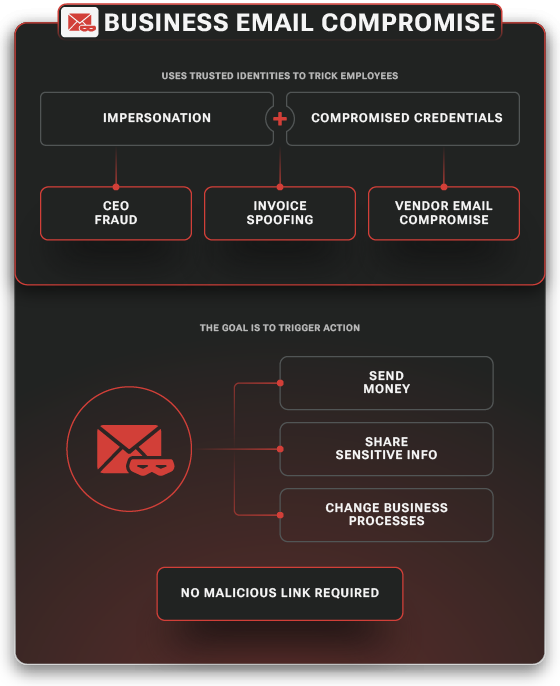
BEC is a cyberattack that uses trusted identities to trick employees into transferring money, sharing sensitive information, or changing business processes. Unlike traditional phishing that relies on malicious links, BEC relies on impersonation and compromised credentials. Common examples include CEO fraud, invoice spoofing, and vendor email compromise.

Business Email Compromise

Why Legacy Tools
Fail Against BEC

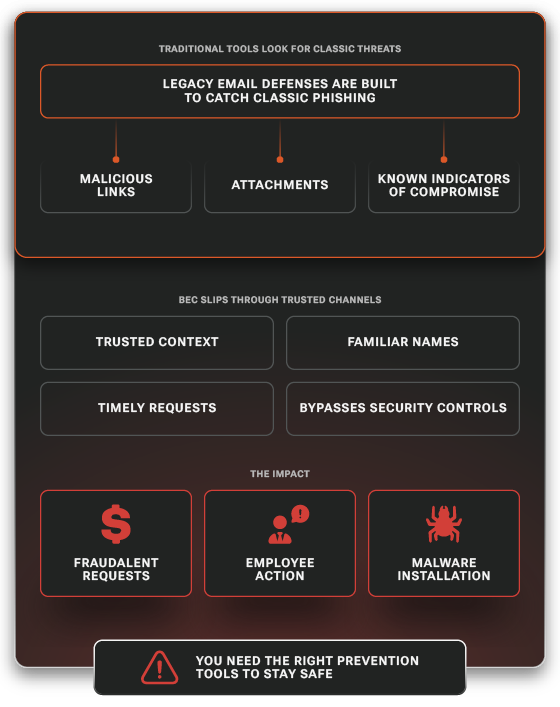
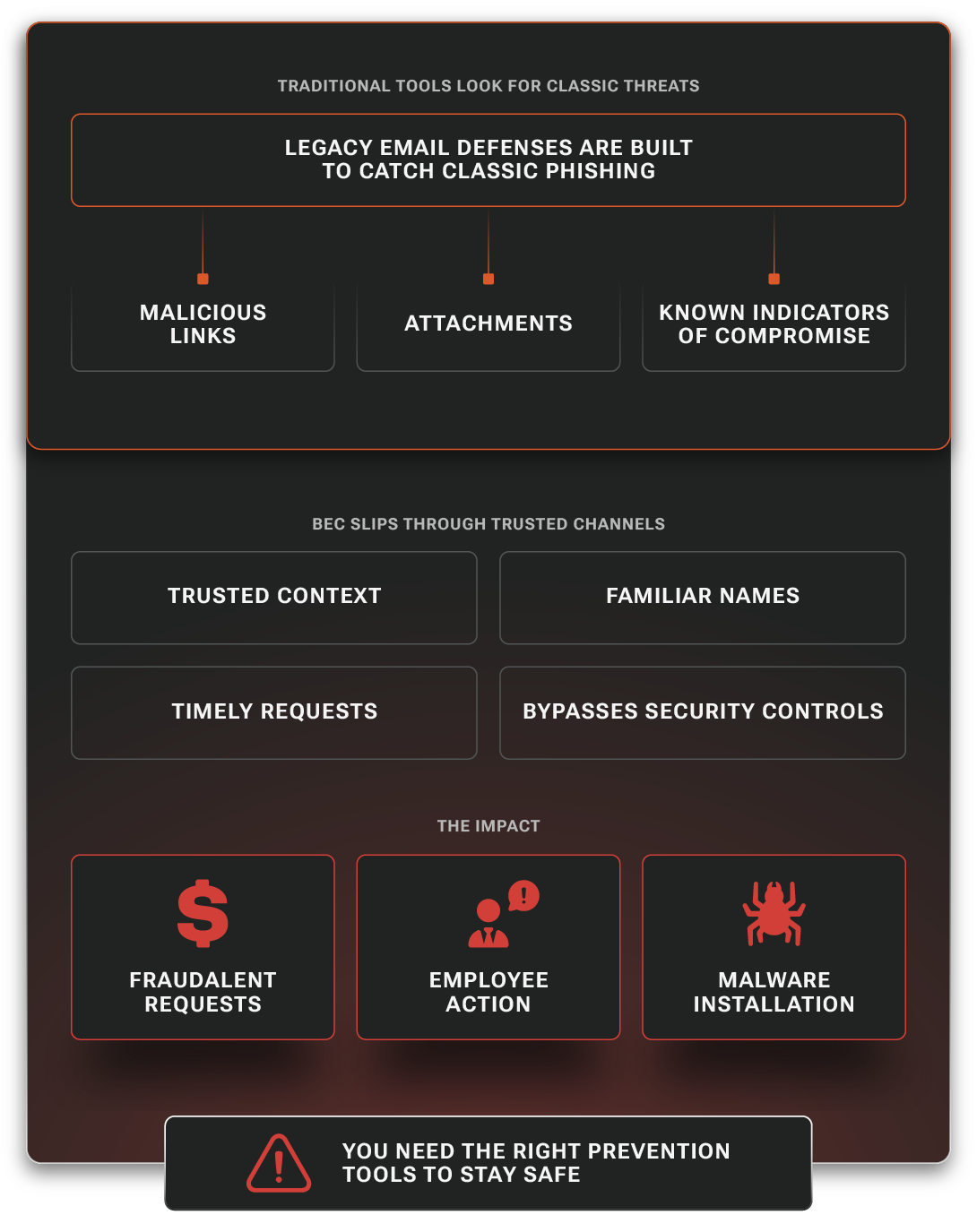
Traditional Secure Email Gateways (SEGs) are designed to identify malicious links, attachments, and known indicators of compromise.

Attackers often gain access to legitimate Microsoft 365 or Google Workspace accounts. Their emails then appear to come from trusted users and domains. As a result, fraudulent requests can bypass traditional email defenses, reach employees, and deliver malware without triggering security controls. BEC attacks can be creative and devastating, and you need the right prevention tools to stay safe.

Business Email Compromise

The Cost of BEC for Regulated Industries

The impact of a compromised inbox has multiple levels of consequences.

Financial Loss

Financial Loss

BEC can result in fraudulent wire transfers, invoice fraud, and unauthorized payment changes that are difficult to reverse.

Sensitive Data Exposure

Sensitive Data Exposure

Compromised email accounts often contain contracts, customer data, IP, and Controlled Unclassified Information (CUI).

Compliance Risk

Compliance Risk

For regulated organizations, an exposed inbox may trigger reporting obligations and increased scrutiny during CMMC/NIST 800-171 audits.

Contract & Revenue Impact

Contract & Revenue Impact

Security incidents involving sensitive data can affect customer trust, prime contractor relationships, and future contract opportunities.

How RADICL Stops BEC

RADICL's expert consultants are focused on how to stop BEC and protect your assets.

Icon2-66

Detect (MDR)

Monitor Microsoft 365 and Google Workspace activity for signs of account compromise, suspicious access, and inbox manipulation. Gain confidence that RADICL can identify compromised accounts before fraud occurs.

24/7 Health Monitoring

Analyze & Prove (MLA)

Centralize logs and reconstruct attacker activity with the audit evidence needed for investigations and compliance. AI-assisted natural language search traces exactly what the attacker did.

Respond (vSOC)

Respond (vSOC)

Go beyond alerts. Contain compromised accounts, revoke access, and coordinate remediation before fraud or data exposure occurs with human-led vSOC.

Icon2-68

Train (MSA)

Reinforce employee awareness with training built around the BEC tactics attackers actively use today.

Shared Responsibility
(Working with Your MSP)

RADICL works alongside your Managed Service Provider (MSP), combining managed IT operations with continuous security monitoring, detection, and response.

Responsibility
RADICL vSOC + Platform
MSP
Customer
24/7 monitoring, alert triage, investigation
Primary (Cases)
Informed / supports context
Informed
Incident response coordination
Primary coordinator (Workflow)
Executes approved changes (typical)
Approves business decisions
Remediation tasking & tracking
Defines tasks, tracks to closure (Tasks/Inquiries)
Executes fixes (typical)
Approves risk acceptance
Vulnerability remediation operations (risk-based)
Prioritizes + provides step-by-step guidance (MAS)
Implements remediations (typical)
Ensures resources/time allocated
Compliance evidence readiness (CMMC/NIST)
Guides assessments + evidence spot-checks (MCA)
Provides artifacts where in scope
Accountable for compliance outcome

Stop BEC and Prove Your Compliance

Reduce financial risk, protect sensitive data, and strengthen your compliance posture with RADICL.

Talk to a Specialist

Frequently Asked Questions

What is the difference between BEC and Phishing?

BEC is a type of phishing attack that relies on trusted identities rather than malicious links or attachments. Traditional phishing often attempts to steal credentials or deliver malware. On the other hand, BEC focuses on impersonation, compromised accounts, and fraudulent business requests such as wire transfers or invoice changes.

How does BEC impact CMMC compliance?

A successful BEC attack can expose CUI, compromise sensitive communications, and create compliance concerns that require investigation and documentation. For organizations pursuing or maintaining Cybersecurity Maturity Model Certification (CMMC) compliance, compromised email accounts may trigger reporting requirements and increased scrutiny during assessments.

Does RADICL integrate with Microsoft 365 and Google Workspace?

Yes. RADICL monitors identity and security telemetry from Microsoft 365 and Google Workspace. This helps identify suspicious logins, compromised accounts, unauthorized inbox rule changes, and other indicators of BEC activity.