





















Cybersecurity for Renewable Energy

Protect Clean-Energy Operations. Operate the Hard Controls. Prove the Work.

RADICL provides vSOC-led renewable energy cybersecurity for operators, developers, and supply-chain partners across solar, wind, and battery storage. We help lean IT and security teams maintain 24/7 awareness, centralize security logs, reduce vulnerabilities, prepare for incidents, and produce defensible evidence as grid oversight evolves.
Talk to a Specialist Learn About Our Platform
  • ACS

  • Aerial Machine & Tool

  • Agile Space Industries

  • Anew Solutions

  • Barn Owl Tech

  • Blue Sky Innovators

  • C Speed

  • DLZ

  • Electra Aereo

  • Firehawk Aerospace

  • G&H

  • Havoc AI

  • HTX Labs

  • Miltope

  • MAK Technologies

  • Red6

  • SpektreWorks

  • Stonhard: Commercial & Industrial Flooring

  • Trenton Systems

  • Urban Sky

  • VATN Systems

  • Zone5 Technologies

What Is Renewable Energy Cybersecurity?

Renewable energy cybersecurity protects the digital systems, identities, networks, and data supporting solar, wind, and battery energy storage systems (BESS). It spans corporate and engineering IT, remote access, vendor connections, and supported telemetry where business networks meet operational technology (OT).

A renewable energy cybersecurity program can include:

  • 24/7 monitoring and response across supported systems
  • Identity, remote-access, and third-party security
  • Logging and visibility around the IT/OT boundary
  • Vulnerability management and remediation tracking
  • Security awareness and incident readiness
  • Evidence supporting regulatory, customer, and partner reviews

Solar cybersecurity, wind energy cybersecurity, and BESS cybersecurity share many of these operational needs, even when their assets and regulatory requirements differ.

Div Line_Desktop
Div Line_Mobile

Why Renewable Energy Is Now a Cybersecurity and Compliance Priority

Utility-scale solar, wind, and storage play a growing role in Bulk Power System operations. In 2026, the North American Electric Reliability Corporation (NERC) expanded registration to certain non-BES inverter-based resources (IBRs), bringing new organizations into NERC oversight for the first time.

What's Changed
What It Means for Renewable Operators
Category 2 registration is now in effect
Certain non-BES IBRs with at least 20 MVA of aggregate nameplate capacity, connected through a system delivering that capacity to a common point at 60 kV or higher, can qualify as Category 2 Generator Owners or Generator Operators. Registrations became effective May 15, 2026.
Registered entities now face applicable Reliability Standards
Category 2 entities became subject to an initial group of Reliability Standards covering areas such as modeling, protection, operations, and voltage support. NERC CIP was not part of that initial set.
Cybersecurity expectations are still evolving
NERC's current Category 2 compliance matrix lists CIP standards as requiring modification before they apply to Category 2 IBRs. NERC's cybersecurity roadmap also calls for further evaluation of risks associated with Category 2 resources.
Renewable infrastructure is already being targeted
In December 2025, coordinated cyberattacks targeted 30 wind and solar installations in Poland. The attacks disrupted communications with distribution system operators, although electricity generation continued.

Federal Energy Regulatory Commission (FERC) Order 901 is part of a separate but related shift. It directed NERC to develop reliability standards addressing IBR data, modeling, studies, and performance as more inverter-based generation connects to the grid.

For renewable operators, the practical takeaway is clear: NERC oversight is expanding, cybersecurity expectations are evolving, and strong security operations can help teams prepare without waiting for every future requirement to be finalized.

Why Renewable Operators Are
High-Value Cyber Targets

Renewable operations rely on remote connectivity, digital controls, vendors, and geographically distributed assets. Those characteristics can create attractive access points for sophisticated attackers, ransomware groups, and other adversaries.

Grid Access Points

Grid Access Points

Utility-scale solar, wind, and storage facilities connect generation to the wider grid. Security incidents affecting communications, remote access, or supporting systems can complicate operations beyond a single business network.

Nation-State and Grid Disruption

Nation-State and Grid Disruption

Energy infrastructure can attract sophisticated actors seeking intelligence, persistent access, or disruptive capability. Continuous monitoring helps teams identify suspicious activity before it spreads across connected systems.

Distributed, Remote Assets

Distributed, Remote Assets

Renewable portfolios may span multiple sites, vendors, cloud systems, remote connections, and field teams. Maintaining consistent visibility becomes harder as the environment grows.

Lean Teams Behind High-Consequence Work

Lean Teams and New Obligations

Some Category 2 registrants are entering NERC processes for the first time while operating with relatively lean security teams. They need a practical way to sustain security operations, understand responsibilities, and maintain evidence as requirements evolve.

What Cybersecurity Requirements Apply to Renewable Energy Organizations?

The answer depends on your assets, registration status, interconnection, contracts, and system classifications. Confirm regulatory applicability for your specific organization and facilities.

NERC's 2026 security guidance for IBRs also recommends risk-informed practices around remote access, identity, network segmentation, supply-chain risk, secure communications, asset management, and incident response. The guidance is advisory and specifically recognizes that many utility-scale IBRs currently fall outside mandatory CIP applicability.

Div Line_Desktop
Div Line_Mobile

Where Lean Renewable Teams Get Stuck

Many renewable operators need strong security operations while also adapting to new grid oversight and growing portfolios.

RADICL takes on defined security work while keeping internal teams informed about what happened, what was resolved, and what still needs attention.

New to NERC registration

New to NERC registration

Category 2 registrants entering NERC processes for the first time must learn terminology, responsibilities, and evidence expectations.

Icon-237

No practical 24/7 coverage

Lean security teams cannot monitor and investigate activity around the clock while supporting generation, infrastructure, and daily operations.
IT/OT and remote asset blind spots

IT/OT and remote asset blind spots

Dispersed facilities, vendor access, and remote connections create monitoring, telemetry, and response gaps where IT meets OT.

Alert and vulnerability overload

Alert and vulnerability overload

Security tools often generate more alerts and vulnerability findings than internal teams have time to investigate, prioritize, remediate, and verify.

Unclear response authority

Unclear response authority

During an incident, IT, operations, vendors, MSPs, and leadership need to know who can isolate, restore, escalate, report, or communicate.

Evidence and proof burden

Evidence and proof burden

Grid operators, customers, insurers, and regulators may request current evidence of security practices and incident readiness.

The Hardest Cybersecurity Controls for Renewable Operators

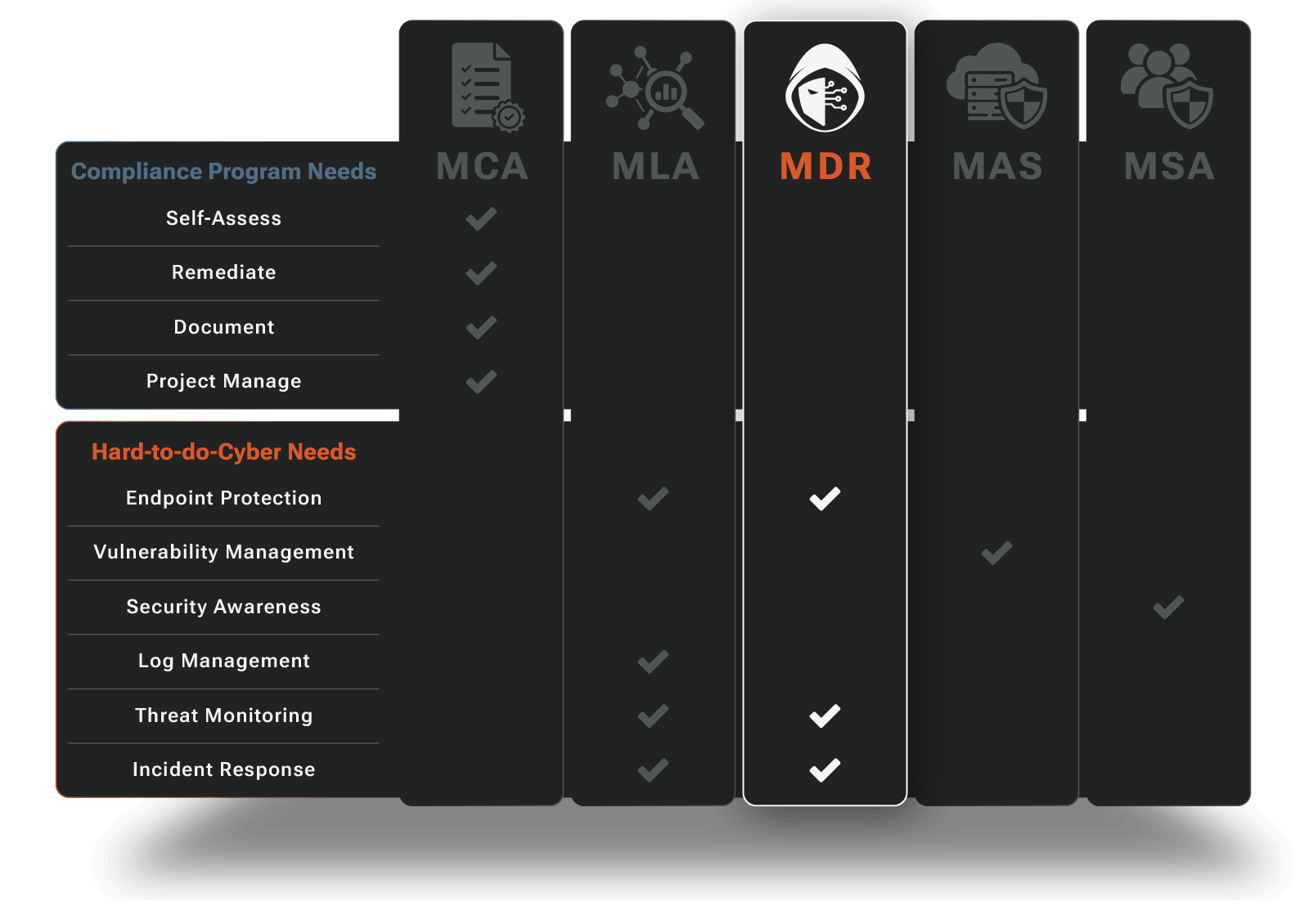
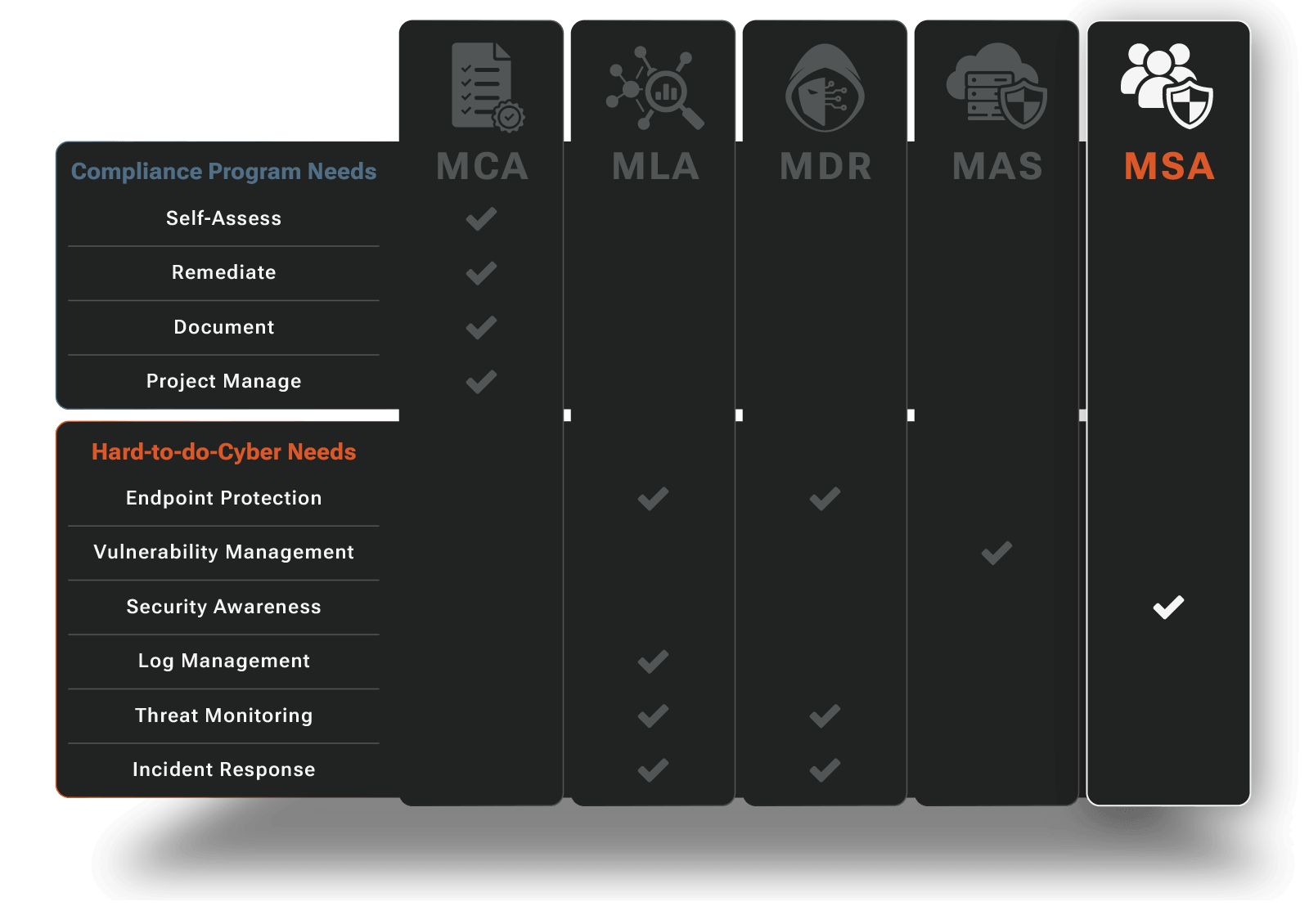
The hardest cybersecurity work is often operational and recurring. Logging, incident response, vulnerability management, and employee awareness all require consistent ownership over time.

These capabilities strengthen everyday security while creating useful evidence for regulatory, customer, and partner reviews.

Log Management

Log Management

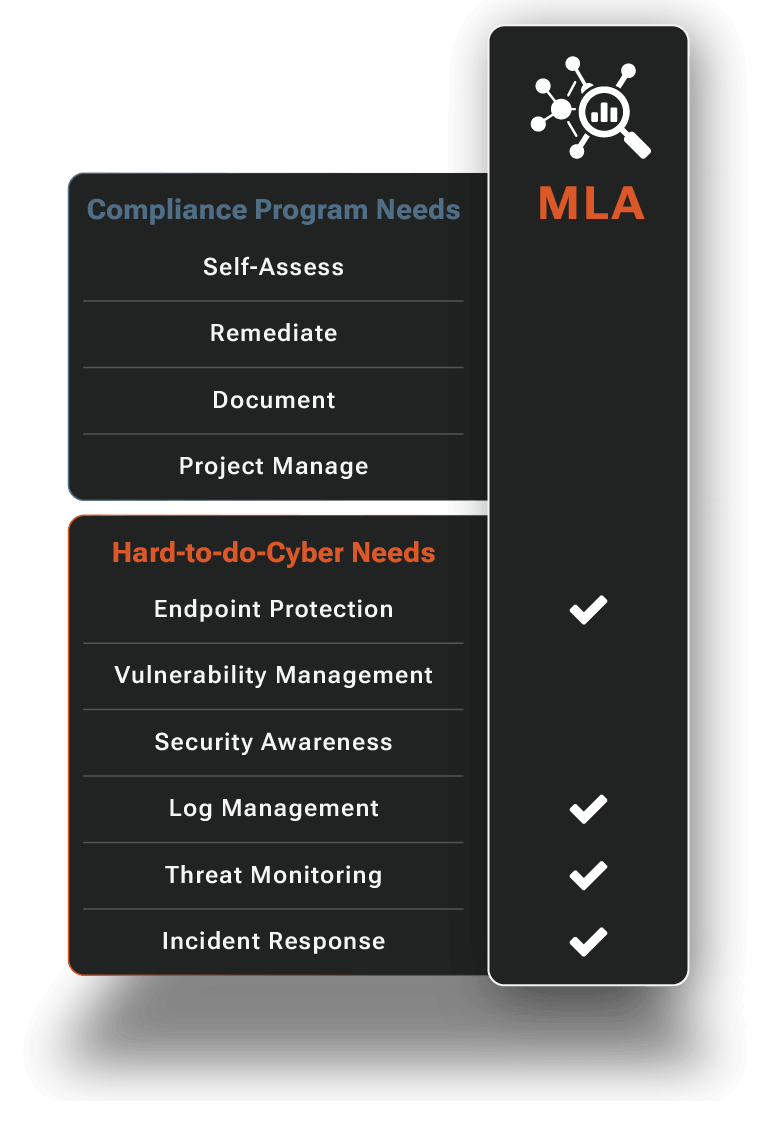
Managed Log Analytics (MLA) collects, normalizes, retains, and searches logs from supported sources.

RADICL also monitors ingestion health, helping teams identify collection gaps and maintain useful records for investigations and evidence.
Incident Response

Incident Response

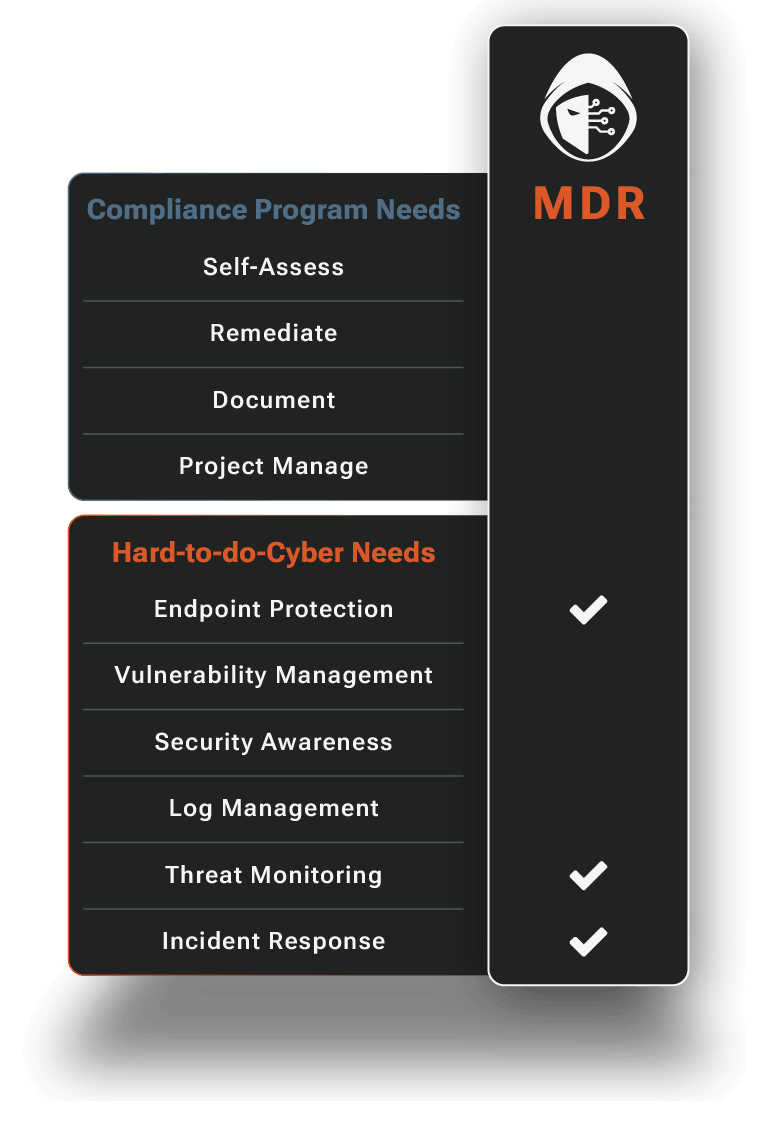
Managed Detection and Response (MDR) provides 24/7 investigation, supported containment, and coordinated response.

RADICL can also help teams test roles, escalation paths, and communications through tabletop exercises where included in the engagement.
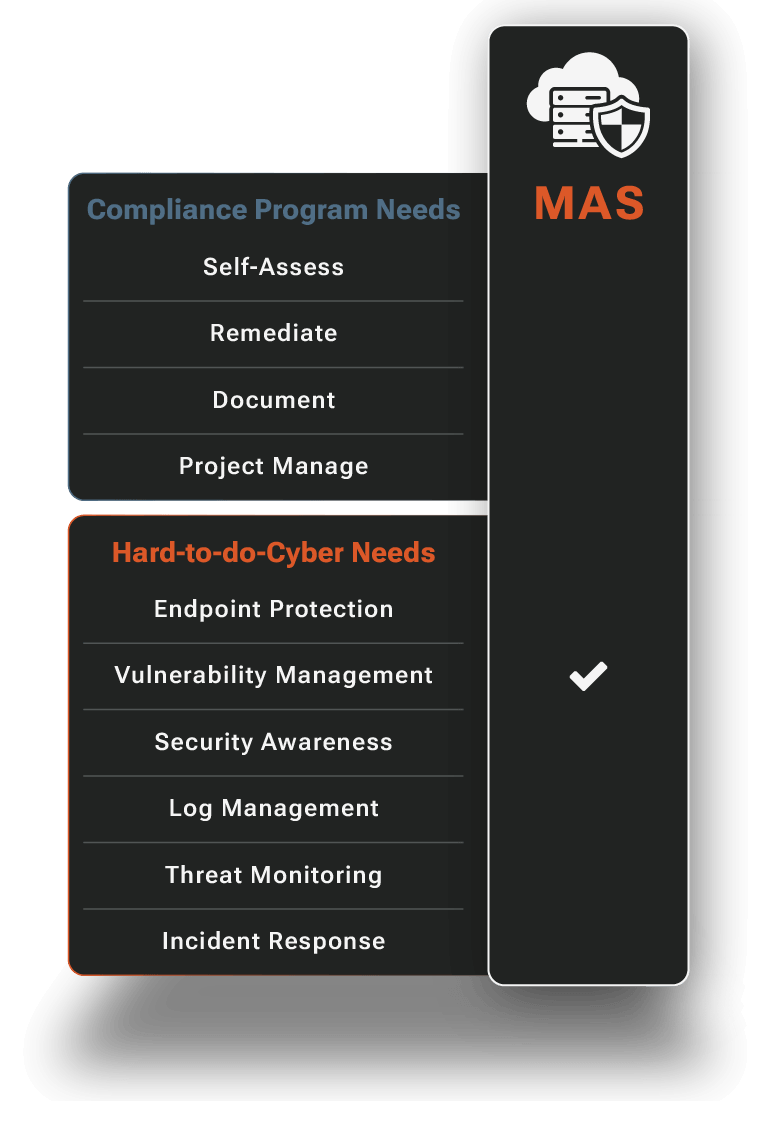
Vulnerability Management

Vulnerability Management

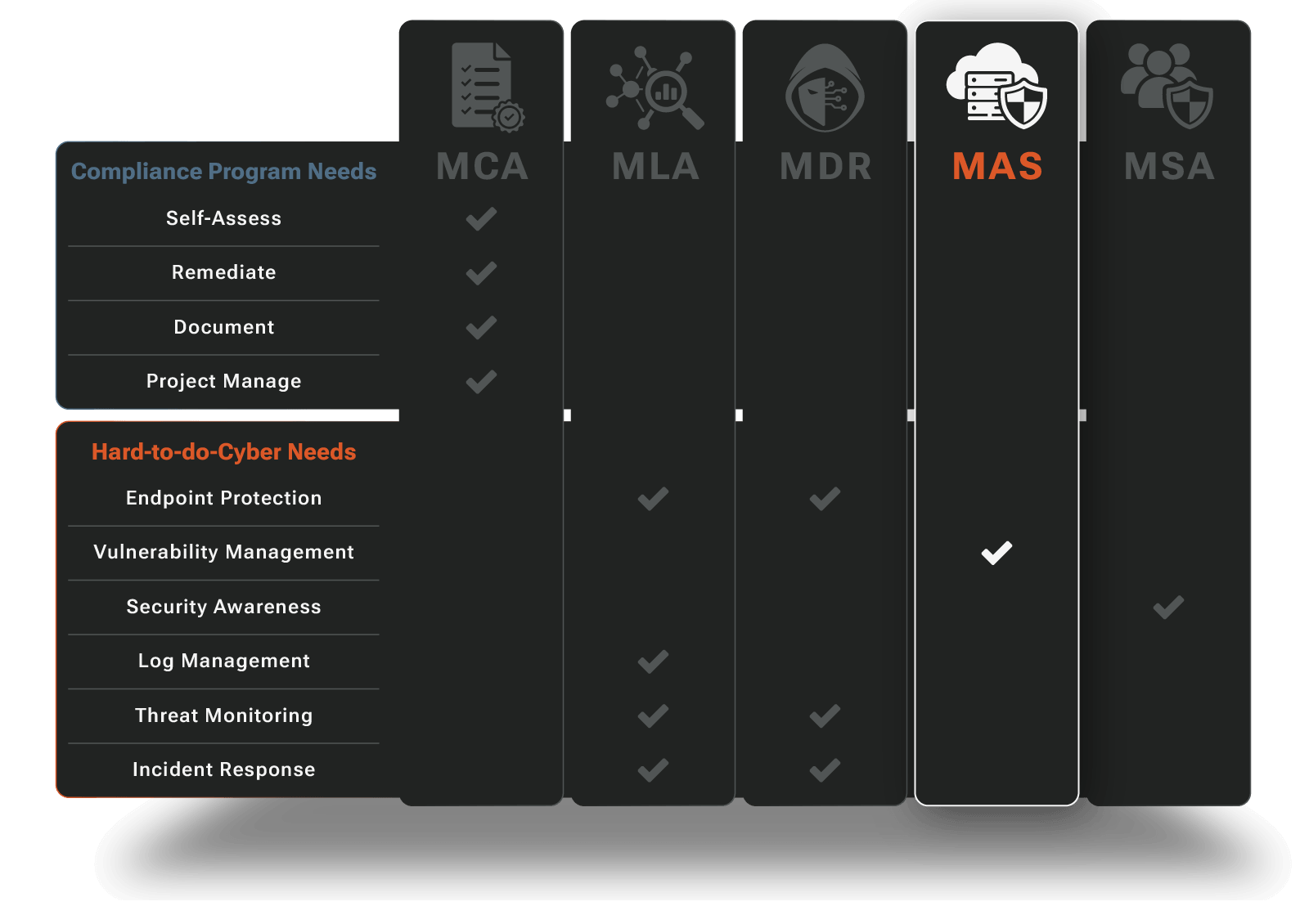
Managed Attack Surface (MAS) continuously identifies vulnerabilities and prioritizes them using technical and business context.

RADICL provides remediation guidance, tracks progress, and verifies reported closure.

Security Awareness

Security Awareness

Managed Security Awareness (MSA) provides ongoing training and phishing simulations informed by real threats observed through RADICL's vSOC.

Teams gain clearer visibility into participation and employee risk.

Options for Renewable Organizations

Your starting point depends on your assets, registration status, operational constraints, and the systems your team owns.

Path
What It Is
Best for
Corporate IT and Data Path
Focus managed security operations and evidence on the corporate and engineering environment where identities, email, project data, cloud services, and business systems live.
Developers, EPC and O&M firms, suppliers, and operators whose primary cyber exposure sits in corporate or engineering IT.
IT/OT Boundary Path
Build visibility and response around supported network and security telemetry where corporate systems connect to operational environments. OT-specific changes remain coordinated with your OT owners and equipment vendors.
Operators whose control environments require careful separation while supported network boundaries can be monitored.
NERC Readiness and Evidence Path
Strengthen recurring monitoring, logging, incident readiness, vulnerability management, awareness, and evidence while coordinating with OT and compliance owners. Exact NERC and CIP applicability remains facility-specific.
Category 2 registrants and other renewable operators preparing for applicable NERC requirements and evolving cybersecurity expectations.

RADICL’s vSOC-Led Model

RADICL's vSOC provides the operational layer around the security systems you support in your renewable environment.

No practical 24/7 coverage

Monitor Continuously

Analyze supported endpoint, identity, network, and log telemetry around the clock using expert-led, AI-assisted workflows.

Evidence and review burden

Investigate and Coordinate

Investigate suspicious activity, take supported response actions, and coordinate remaining work with your IT team, MSP, OT owners, or vendors.

IT/OT boundary blind spots

Keep the Work Visible

Track cases, remediation, responsibilities, and supporting evidence so teams can see what happened and what still needs action.

Our Solutions

Div Line_Desktop

Managed Detection
and Response

Maintain 24/7 analysis, investigation, threat hunting, and coordinated response across supported endpoint, identity, and network telemetry with Managed Detection and Response (MDR). RADICL's vSOC uses AI-assisted workflows for speed and consistency while security experts retain oversight.

  • Endpoints and Servers Protected
  • Evasive & Embedded Threats Detected and Stopped
  • 24/7 Security Operations Has Your Back
  • Incidents Managed End-to-End
  • Virtual CISO By Your Side

MDR: Endpoint

MDR: Endpoint is the foundation of our MDR offering. We deploy, optimize, and maintain leading EDR technologies (for example, CrowdStrike, SentinelOne, and Microsoft Defender) across your laptops, workstations, and server infrastructure. We deploy custom detection analytics to spot threats out-of-the box EDR miss.

MDR: Identity

With MDR: Identity, we ingest and analyze data from Identity and user activity data sources like Microsoft 365 and Google Workspace. We monitor authentication activity, access to sensitive data and files, and email behavior to detect account takeover, inbox compromise, and data exfiltration.

MDR: Network

MDR: Network collects alarms and threat data from physical, wireless and cloud network infrastructure. We correlate this with endpoint and identity telemetry to fully investigate suspicious behavior and provide defense‑in‑depth coverage.

How RADICL Detects and Responds

Below is a closer look at our Managed Detection and Response (MDR) operations. This is how we turn signals into 24/7 investigations, containment, and tracked remediation.

 
Stage
What We Do
What You Get
1
Signals In
Ingest endpoint, identity, infrastructure, and network telemetry.
Full visibility with guided onboarding and managed data operations.
2
DeepThreat™ Analytics
Apply continuous analytics using proprietary threat intelligence.
Detection of threats missed by standard vendor alerts.
3
DeepThreat™ Hunts
Conduct expert-led threat hunts across your environment.
Identification of hidden and stealthy threats.
4
Triage
Evaluate alerts to determine real risk.
Confidence that every alert is reviewed and validated.
5
Investigate
Analyze incidents and capture evidence.
Clear incident visibility with documented findings and history.
6
Execute and Coordinate Response
Contain threats and coordinate remediation.
Confidence that response is handled and actions are clearly owned.
7
Improve Resiliency
Apply learnings and implement proactive defenses.
Stronger security posture with tracked actions and audit-ready evidence.
Div Line_Desktop

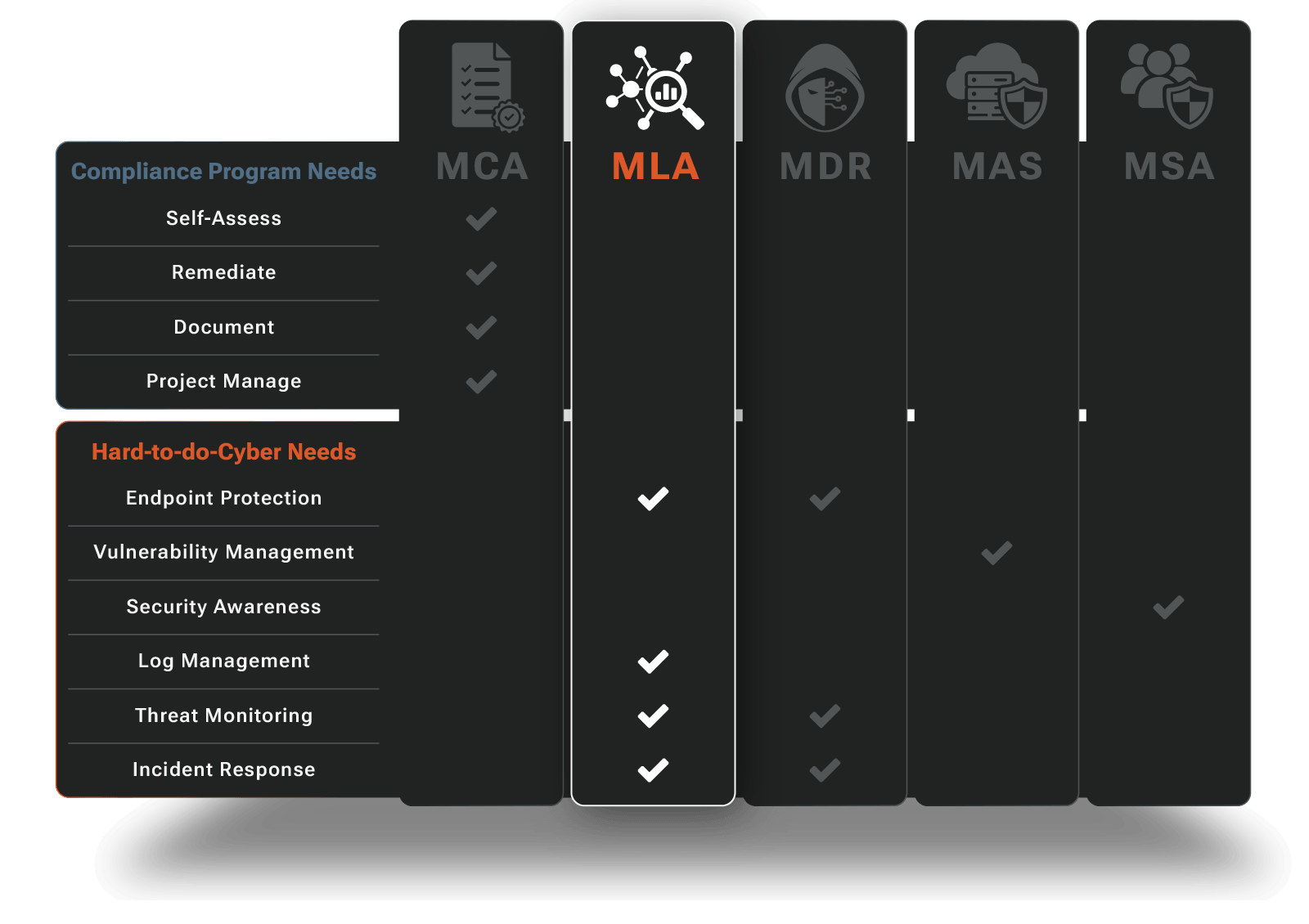
Managed Log Analytics

Centralize supported security logs with Managed Log Analytics (MLA). RADICL manages collection, normalization, search, retention, and ingestion-health monitoring, giving teams useful records for investigations and evidence reviews.

  • 14 or 90-Day Velocity Search + 1-Year Archive
  • AI-Assisted Natural Language Search
  • Hunt UX with vSOC Incident Escalation
  • On-Demand Compliance Evidence Export
  • vSOC-Managed Ingestion & Health Monitoring
RADICL_MCA Overview
Div Line_Desktop

Managed Attack Surface

Use Managed Attack Surface (MAS) to continuously identify vulnerabilities, prioritize findings using business and technical context, and track remediation to verified closure.

  • Endpoint and Server Vulnerabilities Detected and Prioritized
  • Pragmatic and Manageable Remediation Pace
  • Accelerated Critical Fix Response
  • Expert Guidance and Collaboration With Your IT/MSP Partners
  • Closed Loop “Fixed” Visibility
RADICL_MCA Overview
Div Line_Desktop

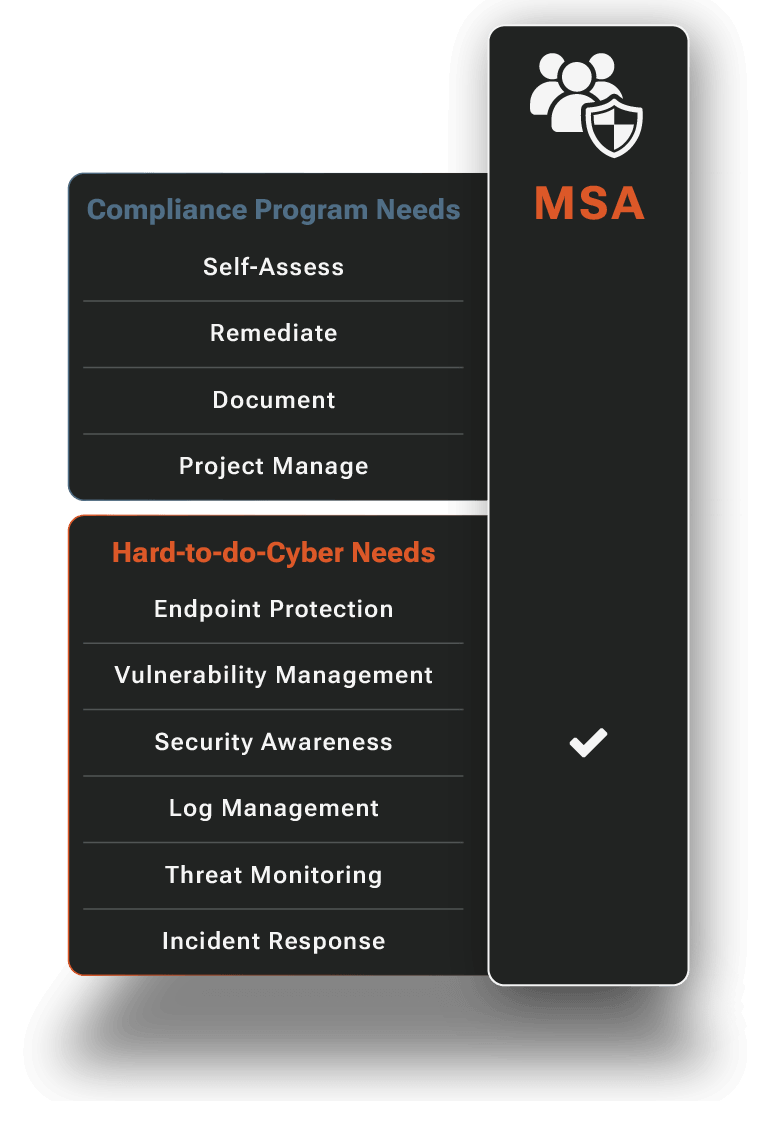
Managed Security Awareness

Reduce employee-driven risk with Managed Security Awareness (MSA). RADICL manages training and phishing simulations while giving leadership visibility into participation and employee risk.

  • Comprehensive Annual Training
  • Ongoing “Bite Sized” Training
  • Phishing Attack Simulations
  • Ever Evolving Expert Content
  • Security Awareness Posture Visibility
RADICL_MCA Overview
Div Line_Desktop

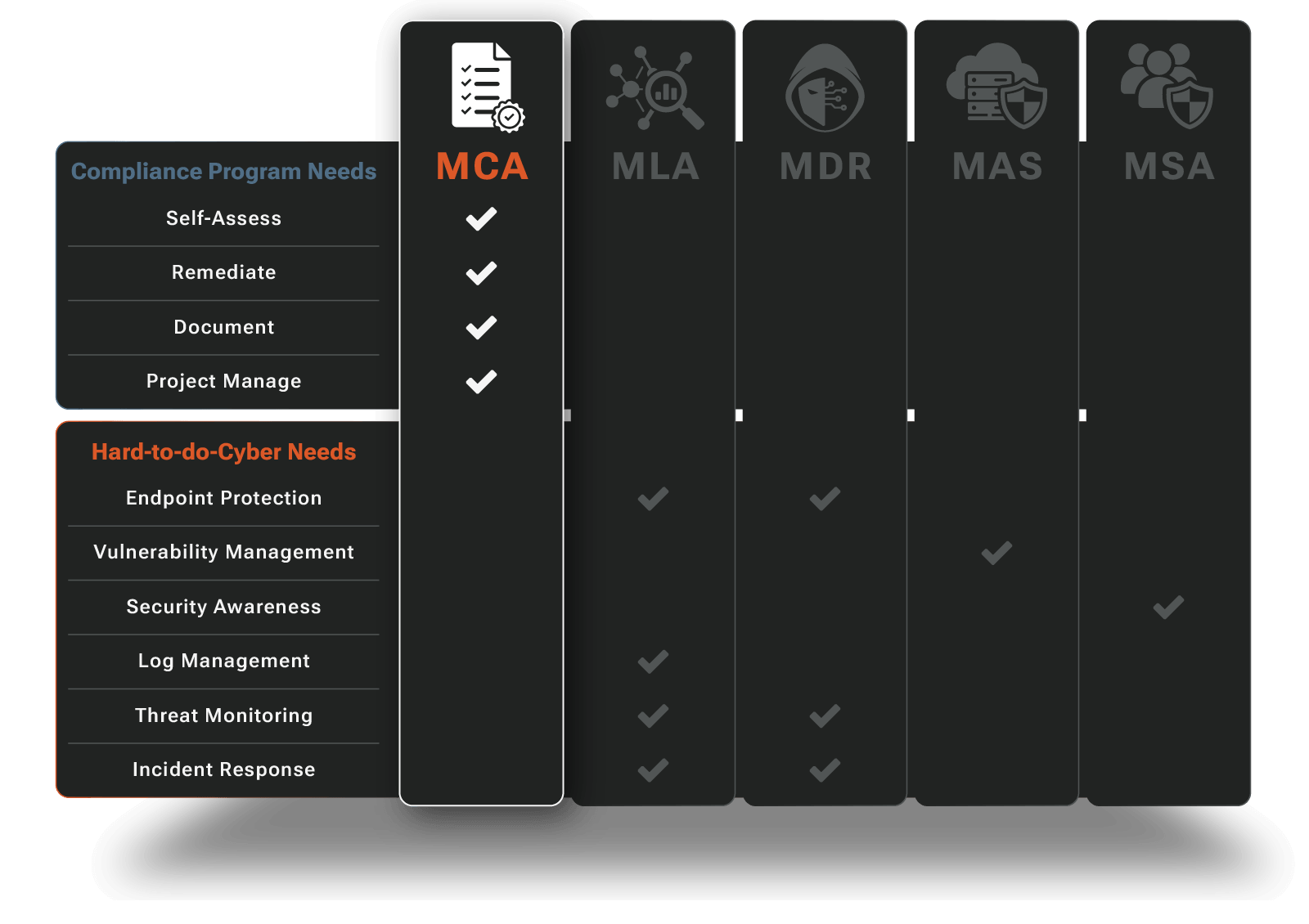
Managed Compliance Adherence for CMMC and NIST

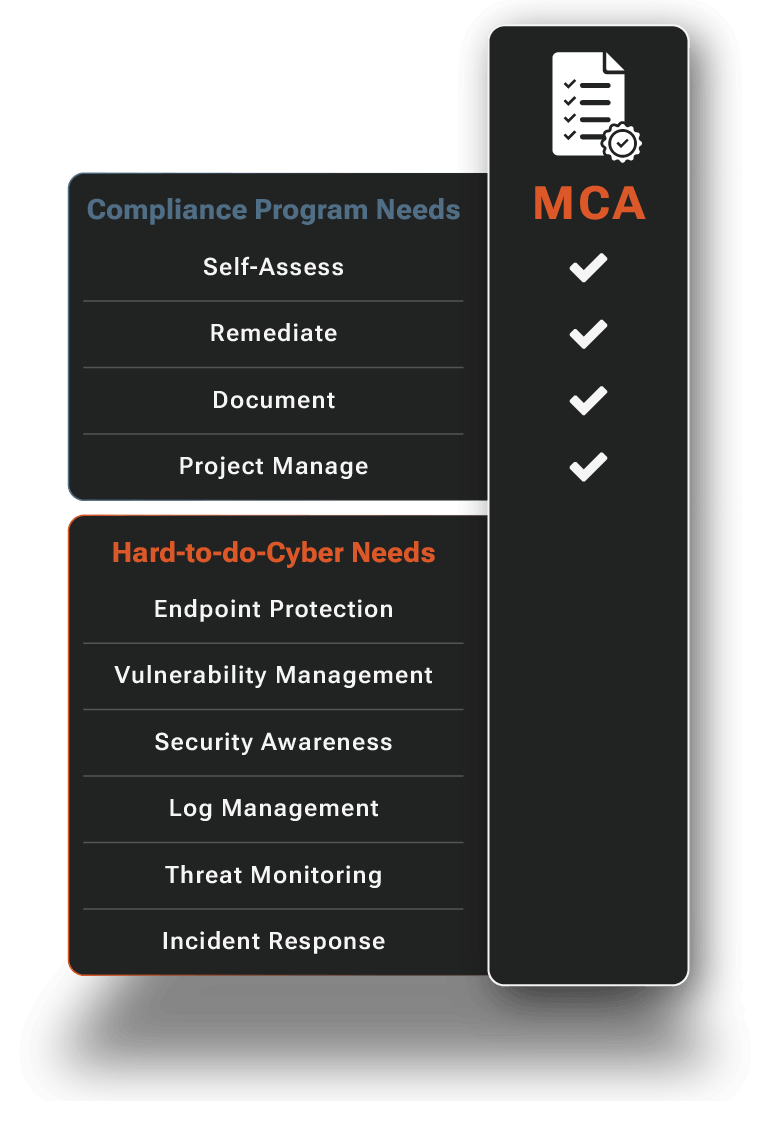
Managed Compliance Adherence (MCA) supports guided assessments, remediation guidance, documentation, evidence management, and ongoing posture tracking for applicable NIST-based and contractual requirements. For renewable organizations, it can also help keep security evidence organized for readiness and review workflows.

  • Self-Assessments Guided and Made Easy
  • CMMC and NIST Adherence Gaps Quickly Closed
  • Audit Trail and Evidence Capture
  • Compliance Posture Clarity
  • External Audit Preparedness & Efficiency
RADICL_MCA Overview

RADICL's Protection Delivered Dashboard

Security operations should be visible to the people accountable for them. The Protection Delivered Dashboard gives your team visibility into work completed, open activity, and protection delivered across your RADICL engagement.

Our Protection Delivered Dashboard

Watch this video to learn how with RADICL, you'll enjoy real-time visibility into how we are:

Pricing: Find the Right Coverage for Your Environment

If you are evaluating a managed SOC service, pricing depends on environment size, coverage scope, and required compliance support. RADICL helps you scope the right level of coverage without overbuying.

View Pricing Get a Scoped Quote

Frequently Asked Questions

What is NERC CIP?

NERC Critical Infrastructure Protection (CIP) is a family of mandatory cybersecurity Reliability Standards for applicable registered entities and Bulk Electric System Cyber Systems.

The standards address areas such as system categorization, security management, access controls, incident response, recovery, information protection, configuration management, and supply-chain risk. Applicability varies by entity, asset, system, and individual standard.

Who does NERC CIP apply to, and does it apply to my solar, wind, or storage facility?

NERC CIP applicability depends on your registered functions, facilities, and whether applicable systems qualify as BES Cyber Systems.

Category 2 registration alone does not automatically make a solar, wind, or battery-storage facility subject to CIP. NERC's current compliance matrix lists the CIP standards as requiring modification before they apply to Category 2 IBRs.

Smaller distribution-connected or behind-the-meter distributed energy resources (DERs) also fall outside the specific Category 2 registration initiative discussed here. Confirm applicability for your facilities with the appropriate Regional Entity and qualified regulatory resources.

What changed for renewable operators in 2026?

Category 2 Generator Owner and Generator Operator registrations became effective on May 15, 2026.

The criteria capture certain non-BES IBRs with at least 20 MVA of aggregate nameplate capacity connected through a system delivering that capacity to a common point at 60 kV or higher. Category 2 entities became subject to an initial set of eight Reliability Standards, while NERC continues work on broader IBR requirements.

What are NERC CIP Low Impact requirements?

For assets containing Low Impact BES Cyber Systems, current CIP-003 requirements include documented cybersecurity policies and plans covering awareness, physical security, electronic access, incident response, malicious-code risk from transient assets and removable media, and vendor remote access controls.

Low Impact status is determined through the applicable CIP framework. Category 2 registration by itself does not mean a facility has Low Impact BES Cyber Systems.

Does RADICL make our organization NERC CIP compliant?

RADICL does not guarantee NERC CIP compliance or determine whether a facility falls within a specific CIP requirement.

We can operate and document defined security capabilities that may support applicable requirements, including monitoring, logging, incident response, vulnerability management, awareness, and evidence workflows.

Your organization remains responsible for regulatory applicability and requirements outside the RADICL engagement.

Does RADICL secure inverters, SCADA, or control systems?

RADICL's core managed services focus on supported endpoint, identity, network, logging, and security telemetry, including visibility around supported IT/OT boundaries.

RADICL should not be treated as a replacement for OT-native security controls or vendor-specific protections inside inverters, supervisory control and data acquisition (SCADA) systems, or other control equipment.

During scoping, we define which telemetry RADICL can safely integrate and which responsibilities remain with your OT team, equipment vendors, or other specialists.

We are a developer or EPC/O&M firm, not an operator. Is this still relevant?

Yes. Renewable energy cybersecurity extends beyond generation operations.

Developers, engineering, procurement, and construction (EPC) firms, and operations and maintenance (O&M) providers manage identities, engineering information, project data, remote access, cloud systems, and vendor relationships that can all introduce cyber risk.

Your regulatory obligations may differ from an owner or operator, but strong security operations can still protect your business and customers.

Can RADICL work with our existing MSP or internal IT team?

Yes. RADICL is designed to work alongside your existing operating model.

Your internal IT team or MSP can continue managing infrastructure and customer-side changes while RADICL handles defined security operations and coordinates remediation.

Learn more about RADICL's approach for MSPs and IT Leaders.

Do lean or growth-stage renewable operators need a full SOC?

Many lean renewable teams use a managed vSOC instead of staffing a 24/7 internal security operation.

RADICL's vSOC provides continuous monitoring, investigation, threat hunting, and coordinated response so your internal team can stay focused on its core responsibilities.

What proof do we get for regulators, grid operators, and partners?

The evidence available depends on the RADICL services you use. It can include security cases, investigation and response records, retained logs, remediation history, vulnerability tracking, awareness records, assessment work, and supporting files.

RADICL keeps that work organized and visible so your team can respond to reviews with current records. Exact evidence requirements still depend on the regulator, grid operator, customer, contract, or other reviewing authority.